
Best Stock Market Course for Working Professionals: A Practical 8-Week Plan
- Updated on :
- 30 Views
- by Suhani

 Instagram

There are a lot of people who want to learn trading while working a full-time job, which is not easy. After long working hours and daily responsibilities, only a little time is left to study. That’s exactly why so many beginners find it hard to learn the right way.
Here’s the good news: you don’t need to quit your job to become a trader. Get the best stock market course for working professionals, one that’s structured and gradually helps you build trading skills.
This blog covers a practical 8-week learning plan and explains how working professionals can learn trading with a full-time job through GTF’s Trading in the Zone course.
Why Working Professionals Struggle to Learn Trading
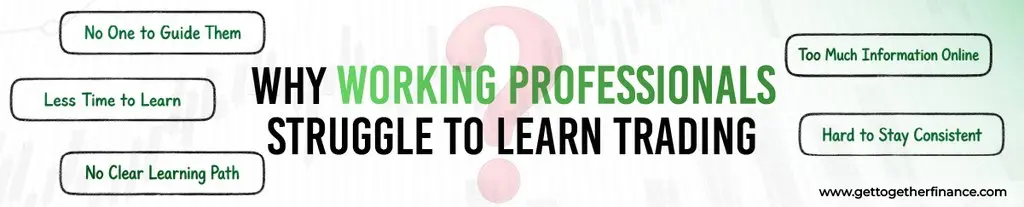
Many people do full-time jobs but want to learn trading to add an extra income stream or deepen their financial knowledge. However, it is not easy to manage both personal life and work.
Here are some common challenges:
- Too Much Information Online: Today, there are thousands of videos, blogs, and courses available on trading. Too much information can make beginners confused about where to start their trading journey.
- No One to Guide Them: When people learn alone, they easily get stuck. It is very difficult to learn without a mentor, as they cannot ask questions, end up repeating the same mistakes, and lose confidence.
- Hard to Stay Consistent: In order to become a successful trader, you need to practice regularly. When you have a busy work schedule, it is difficult to study every day, which slows down your progress.
- Less Time to Learn: It is difficult for a person to study after doing 8 to 9 hours of work because there’s only a little time or energy left. Family and daily tasks make consistency even harder.
- No Clear Learning Path: A lot of people start learning trading without understanding the basics. Without a strong foundation, they struggle to understand advanced concepts.
What a Working Professional Actually Needs From a Trading Course

A person can’t spend their whole day learning trading after a full-time job. They need a course that is practical, simple, and can easily fit into their everyday schedule. Here are some key things to check in a stock market course for job holders:
- Flexible Learning: Working professionals are always short on time. A good part-time trading course in India fits around their schedule, letting them study after work or on weekends without affecting their job
- Risk Management: Before placing a trade, every trader should know how to manage risk. A good course teaches money protection and loss prevention.
- Regular Practice: In trading, a person becomes successful if they practice regularly. A good course should push learners to regularly go through charts and keep an eye on the market.
- Mentor Support: It’s normal to have doubts while learning, especially for working professionals balancing trading with their job. That’s why mentor support is so important throughout the trading journey. A mentor helps you get the right direction, clears your doubts, and helps you avoid common mistakes.
- A Systematic Course: The best course is the one that covers one topic first before moving to the next. In the beginning, it should cover the basics and slowly move to advanced concepts, making learning easier.
When a course brings these features together, a trading course for salaried employees becomes the perfect fit. It allows you to learn at your pace without affecting your job.
The 8-Week Learning Plan: An Overview

You don’t need years to learn trading. With the right plan and regular practice, working professionals can build a strong foundation in just eight weeks. The main goal is to understand how the market works and develop good trading habits instead of becoming an expert overnight.
Week 1-2: Market Foundations and Chart Basics
In the first two weeks, you need to focus on understanding the fundamentals of the stock market and how price charts work. Learn key concepts such as chart timeframes, candlestick patterns, support and resistance, different types of orders, and market participants.
Once this foundation clicks for you, you’ll notice market movements start making a lot more sense.
Week 3-4: Understanding Demand and Supply Zones
When you understand charts properly, the next step is to learn Demand and Supply Zones. These are basically spots on the chart where strong buying or selling has happened before. By identifying these zones, traders can identify good entry and exit points. So during these weeks, spend time marking them out on charts and watching how price reacts when it gets there.
Week 5-6: Building a Rule-Based Trading System
A lot of beginners let emotions drive their decisions, which often leads to mistakes. In order to avoid this, you need a systematic trading approach. During these weeks, build a simple trading plan that covers:
- Entry rules
- Exit rules
- Stop-loss placement
- Target setting
When you have clear plans, you can stay disciplined and make better trading decisions.
Week 7: Risk Management and Position Sizing
One of the most crucial parts of trading is risk management. If you can’t control the risk properly, then even your best strategy can fail. Learn how to set stop-losses, calculate position size, and decide how much capital to risk per trade. These skills can help keep your trading capital safe from big losses.
Week 8: Practicing With Live Market Data
At last, you need to practice all the things that you have learned so far. Analyse live market charts and apply them to real trade setups. Don’t rush to make immediate profit; instead, focus on following rules. This adds real market experience, builds confidence, and enhances decision-making capabilities.
By sticking to this systematic plan, working professionals can learn trading with a full-time job without burning out. This step-by-step approach simplifies learning and builds a strong foundation for long-term success in trading.
How to Fit Study Hours Around a 9-to-5 Schedule

It is important to understand that having a full-time job does not mean you can’t learn trading. The strategy is to study a little every day, rather than trying to learn everything at once. Here are some simple tips that you can follow:
- Use Weekends Wisely: Always use your weekends to revise what you learned during the week so you don’t forget things. Also, you can understand how the market moves and practise chart analysis.
- Follow a Daily Routine: It is non-negotiable to maintain a fixed learning schedule. This builds consistency and drives steady progress.
- Study for 30 to 60 Minutes a Day: Study one topic with full focus for 30 to 60 minutes after work. A little every day beats hours of learning once a week.
- Learn One Topic at a Time: Always complete one topic before starting the next one. It makes learning so much easier and way less confusing.
- Watch the Market Regularly: Along with theoretical knowledge, practical knowledge is also crucial. That’s why it’s worth spending 15 to 20 minutes each day looking at stock charts or market movements. This helps you understand how learned concepts apply in real market conditions.
There is no need to quit your job. With the right study plan and consistent practice, you can learn trading with a full-time job and gradually improve your skills.
Why Lifetime Mentorship Matters After Week 8

Completing a course isn’t the end of learning. In fact, real learning starts when you evaluate the market and practice by yourself. That’s why lifetime mentorship plays a crucial role in trading. It helps you improve your skills, keep learning, and become a more confident trader over time.
- Learn From Your Mistakes: Generally, beginners make the most mistakes, such as not following a stop-loss or taking trades without a proper setup. A mentor can help you catch these mistakes and stop you from repeating them.
- Stay Consistent: Both time and practice are required to learn trading. Even after the course is done, a mentor sticks around to keep you motivated and moving forward.
- Get Answers to Your Questions: At the beginning of your stock market journey, you will have many questions and doubts. A mentor can answer your questions and help you understand where you are wrong.
- Build Confidence: At the beginning, the stock market can seem difficult. But regular guidance from experienced mentors can help you build confidence and make better decisions.
- Keep Improving: The stock market is continuously evolving, so traders also need to keep on learning. With lifetime mentorship, you get support that never stops, and it helps you keep getting better over time.
Even after 8 weeks, learning does not stop for working professionals. When you practice regularly and get the right guidance, you can grow as a trader while managing a full-time job.
How GTF’s Trading in the Zone Course Supports Working Professionals

Balancing a full-time job with learning trading is difficult. That’s exactly why GTF’s Trading in the Zone course is built to keep things practical, simple, and easy to follow for working professionals.
Here are the reasons given for how the course helps:
- Practical Learning: Along with theoretical knowledge, you will gain practical experience by analysing charts and understanding real market examples. This shows you how trading works under real market conditions.
- Lifetime Mentorship: Even after completing the course, experienced mentors are always around you to answer your questions and guide you whenever you need support.
- Easy to Learn Along With Your Job: GTF’s Trading in the Zone Course is suitable for people who have busy work schedules. This makes it possible to learn trading with a full-time job.
- Step-by-Step Learning: The course first helps you understand the fundamentals of the stock market, and then gradually moves to complex concepts. This way, beginners can understand every concept without getting confused.
- Learn Risk Management: GTF’s Trading in the Zone Course teaches you important concepts such as how to protect trading capital, manage risk, and use stop-losses. For every beginner, these are crucial skills to learn.
- Learn Demand and Supply: You’ll learn the Demand and Supply approach in this course. It helps you understand why prices move the way they do and spot potential trading opportunities.
If you are looking for the best stock market course for working professionals, then GTF’s Trading in the Zone is the best fit. It offers hands-on training, lifetime mentorship, and structured learning, which gradually develop your abilities in the market
Common Mistakes Working Professionals Make While Learning

Most working professionals start trading with excitement, but their progress slows down after making some common mistakes. In order to learn faster and build better trading habits, it is important to avoid these mistakes.
- Skipping the Basics
The biggest mistake that people make is skipping learning the fundamentals and directly moving to complex concepts. They need to understand that a strong foundation is what gives them long-term success.
- Practising Too Little
The most important thing in trading is practice; the more you practice, the more you understand the concept. Thus, start analysing charts and observe the market regularly to become more confident in trading.
- Learning Without Guidance
It is very difficult to learn everything on your own. That’s why having a structured course or a mentor can help you clear your doubts and avoid common mistakes.
- Not Following a Study Routine
Trading requires consistency; learning only when you have free time can end up slowing your progress down. Therefore, setting a proper routine of 30 to 60 minutes a day can help you stay consistent.
- Taking Trades Too Early
A lot of people start trading with real money without fully understanding the fundamentals. It’s smarter to practise first and gain confidence before putting your capital at risk.
- Trying to Learn Everything at Once
Several beginners watch multiple videos or apply different strategies at the same time, leading to confusion. Thus, it is always better to learn one concept at a time for proper understanding.
By following a proper plan and avoiding these mistakes, working professionals can grow consistently and develop the skills for disciplined trading.
Is 8 Weeks Enough to Start Trading?

Yes, eight weeks are enough to learn the fundamentals of trading if you stick to a systematic learning plan and keep practising regularly. However, becoming a successful trader requires some crucial skills, such as continuous learning, time, and patience.
In eight weeks, you can learn:
- How to analyse the market before taking a trade
- Basic trading rules
- Risk management
- How to read charts
- How to identify Demand and Supply zones
- How the stock market works
But here’s the thing you need to remember: your trading journey doesn’t just end after eight weeks. In order to better understand the market, you need to practise and study it. Don’t chase quick profit; instead, focus on learning, practising, and building good trading habits. With the right guidance and regular practice, you can enhance your skills gradually.
Conclusion: Your Next Step with GTF
It’s not easy to learn trading while holding down a full-time job, but with the right course, regular practice, and proper guidance, it is achievable. If you are looking for the best stock market course for working professionals, then GTF’s Trading in the Zone is the best fit. It can help you build a strong foundation through lifetime mentorship, practical learning, and the Demand and Supply approach. Begin your trading journey today. Learn and grow steadily.
FAQs

Can I learn trading while working a full-time job?
Yes, with a structured plan and regular practice, you can learn trading without quitting your job.
How much time should I spend learning trading daily?
Studying for 30 to 60 minutes a day can help you stay consistent.
Is 8 weeks enough to learn trading basics?
Yes, eight weeks can help you learn trading fundamentals, but regular practice and continuous learning are still important.
What should working professionals look for in a trading course?
Working professionals should look for flexible schedules, strong risk management rules, direct mentor support, practical exercises, and a structured curriculum.
What topics should I learn first in trading?
You should first start with market basics, chart reading, Demand and Supply zones, and risk management.
Why is mentorship important for working professionals?
Mentorship helps clear doubts, avoid common mistakes, and stay consistent while learning trading.