What Makes a Good Stock Screener? 7 Things Serious Traders Look For
- Updated on :
- 1 Views
- by Juhi Sharma

 Instagram
 Linkedin
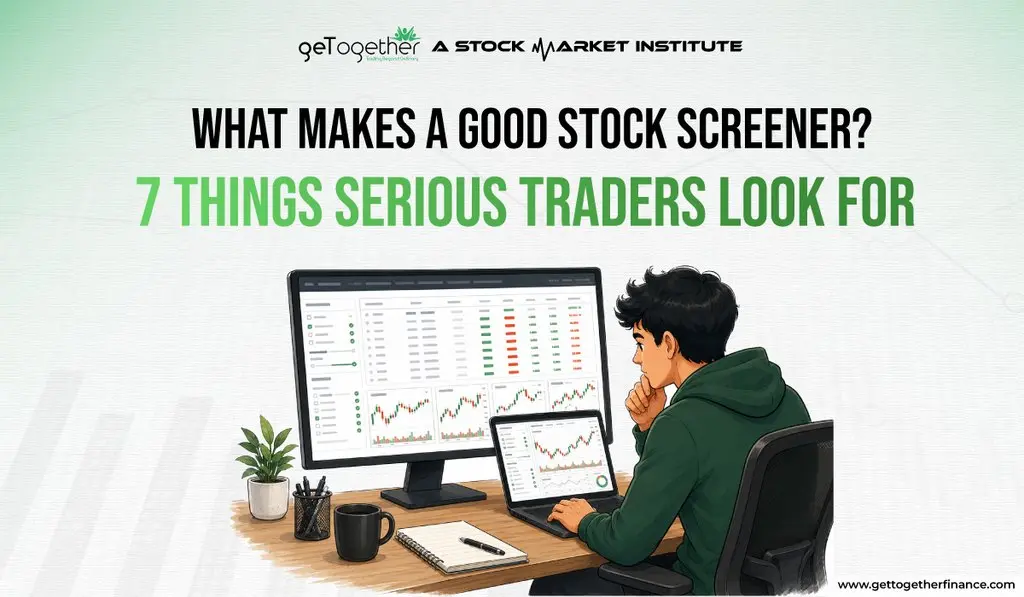
Every trader remembers the first time a screener let them down. You set the filters, you wait for the results, and the list comes back full of stocks that technically match your criteria but have nothing to do with what you actually wanted to trade. That moment teaches you something most beginners never expect to learn early. A screener is not just a filtering tool. It is a decision-making partner, and like any partner, it either understands you or it slows you down.
This is the gap that separates traders who screen with confidence from traders who screen out of habit.
Why Do Most Traders Pick the Wrong Stock Screener?
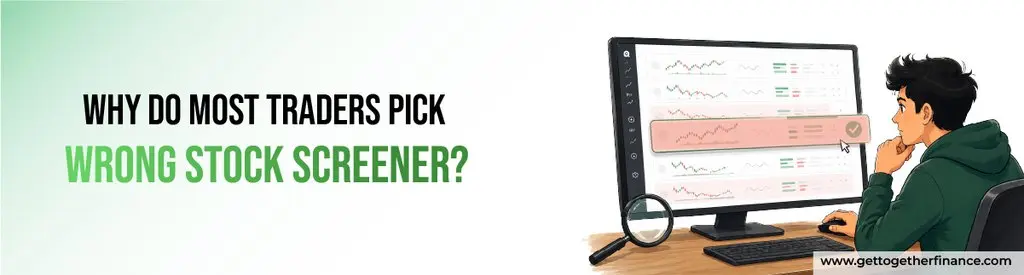
Most traders choose a screener the same way they choose a phone case, based on price, popularity, or whatever shows up first in a search. They sign up, run a few filters, and assume the tool is doing its job because the results look full and busy. The problem only shows up weeks later, when those same filters keep surfacing stocks that do not behave the way the trader expected or when the alerts arrive too late to act on.
The real issue is that a screener is rarely judged on the right things at the start. People look at how many indicators it offers or how clean the dashboard looks, instead of asking whether the screener actually thinks the way they trade. A swing trader and a scalper need completely different things from the same piece of software, yet most platforms are built to serve everyone equally, which usually means they serve no one particularly well.
That is why evaluating a screener properly takes more than a five-minute trial. It takes understanding what actually matters once the excitement of a new tool wears off.
#1. It Must Match Your Trading Strategy, Not Just Filter Stocks
A screener that filters stocks is common. A screener that filters stocks the way your strategy demands is rare. Say you trade breakouts above resistance with rising volume. A generic screener might show you every stock crossing a moving average, which is technically a breakout but not the kind you are looking for. You end up doing the real filtering yourself, manually, stock by stock, which defeats the entire purpose of using a screener in the first place.
The best screeners let you build logic around your actual setup, not just stack generic filters on top of each other. If your strategy depends on relative volume spikes combined with a specific price action pattern, your screener should be able to combine those conditions in one query, not force you to run three separate searches and compare the results by hand.
Once your screener mirrors your strategy instead of fighting it, every other feature starts to matter a lot more.
#2. Real-Time Updates vs End-of-Day Data (Why It Changes Everything)
Picture two traders watching the same stock. One is using a screener that updates every few seconds. The other is working off data that refreshed at the end of yesterday’s session. By the time the second trader notices a setup forming, the first one has already entered, managed risk, and possibly closed the position.
This difference matters far more for intraday and swing traders than most people realise when they first compare screeners. End-of-day data has its place for long-term investors building a watchlist over weeks, but for anyone making decisions during market hours, a delay of even a few minutes can turn a good entry into a late one. Speed is not a luxury feature here, it is the difference between catching a move and reading about it afterwards.
Once you understand how much timing affects outcomes, the next question becomes just as important, what exactly are you being shown?
#3. Quality of Output Matters More Than Quantity of Results
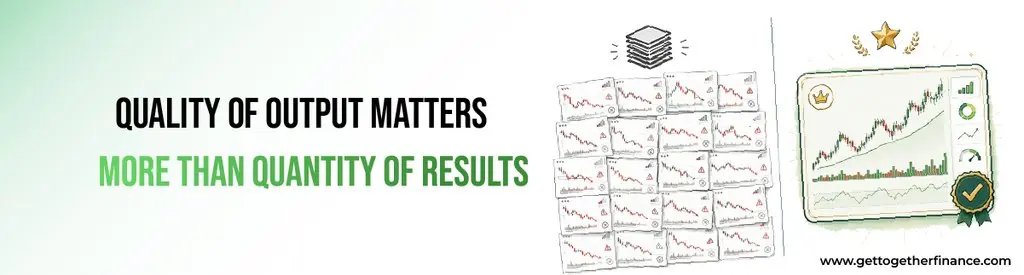
There is a strange comfort in seeing a screener return two hundred results. It feels productive, like the tool has found a lot for you to work with. In reality, two hundred loosely matched stocks are far less useful than fifteen that genuinely fit your criteria. Scrolling through a long list looking for the few that actually make sense is its own form of wasted time, and wasted time during market hours is expensive.
However, a well-built screener trades quantity for precision. It would rather show you a short list you can trust than a long list you have to clean up yourself. This is usually where the underlying logic of the platform reveals itself, because sloppy filtering produces noisy output no matter how many indicators are layered on top.
Good output naturally raises the question of what happens after you spot the setup, which brings us to alerts.
#4. A Reliable Alert System That Works Around Your Schedule
Not every trader can sit in front of a screen for six straight hours. Some have day jobs, some manage multiple positions across markets, and some simply prefer not to stare at charts all day waiting for conditions to align. A screener that only works while you are actively watching it is only half useful.
A dependable alert system should notify you the moment your conditions are met, whether you are at your desk or away from it entirely. It should be specific enough that you are not flooded with alerts for every minor fluctuation and fast enough that the alert still matters by the time you see it. The goal is not to be glued to your screen. It is to trust that your screener is watching the market on your behalf and will tell you the second something worth your attention happens.
Once alerts are working properly, the next consideration is whether the screener can adapt to how you actually trade across different time horizons.
#5. Multiple Timeframe Support for Different Trading Styles
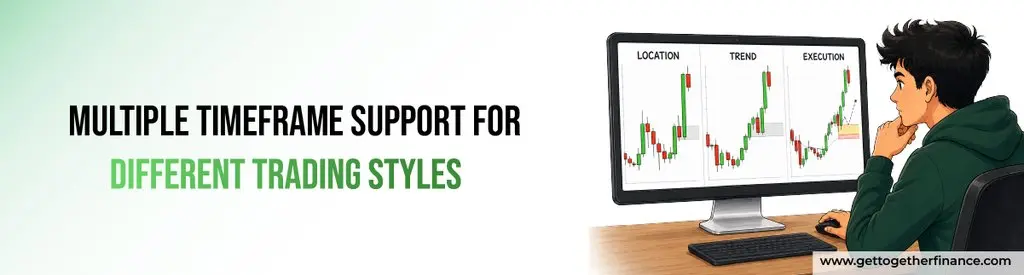
A trader scalping five-minute charts and a trader holding swing positions for two weeks are essentially using the same market for two completely different purposes. A screener that only supports one timeframe forces every user into the same box, regardless of their actual style.
The better screeners let you toggle between timeframes without rebuilding your entire filter set from scratch. You might want to confirm a daily trend before zooming into a fifteen-minute chart for entry timing, and your screener should support that kind of layered analysis instead of treating each timeframe as a separate, disconnected tool. This flexibility becomes especially valuable as your strategy evolves, because most serious traders do not stay locked into one single timeframe forever.
With strategy, speed, output quality, alerts, and timeframes all working together, the experience of actually using the screener day to day becomes the next thing worth examining closely.
#6. Clean Interface That Doesn’t Slow You Down Every Morning
Markets move fast, and mornings move faster. The last thing any trader needs is to spend the first ten minutes of the trading session hunting through cluttered menus just to set up the filters they use every single day. A confusing interface does not just waste time; it adds friction at the exact moment when clarity matters most.
A clean, intuitive layout lets you get from login to actionable results in under a minute. Saved filters, quick toggles, and a logical flow from setup to results all matter more than they seem to on a sales page, but they become obvious the moment you are trading live and every second counts.
A clean interface makes the tool pleasant to use, but the final test of any screener is whether its internal logic actually matches the way you think about trades.
#7. The Logic Must Speak the Same Language as Your Trading System
This is the criterion most traders overlook entirely, and it is arguably the most important one. Every trader has a mental model, a set of rules, however loosely defined, that they use to decide what counts as a valid setup. A screener is only as useful as its ability to translate that mental model into actual filtering logic.
If your system relies on specific relationships between price, volume, and momentum, your screener needs to understand those relationships as a connected idea, not as three separate filters you stack together and hope for the best. The closer the screener’s logic mirrors your own thinking, the less manual interpretation you need to do, and the more you can trust the results it gives you.
This is exactly where most general-purpose screeners fall short, and it is the standard worth holding any serious platform to.
How GTF EYE Measures Up Against All 7 Criteria?
GTF EYE was built around this exact gap between generic filtering and strategy-specific screening. Instead of asking you to fit your trading style into a fixed template, it lets you construct logic that mirrors how you actually evaluate setups, combining price action, volume, and momentum conditions the way your strategy actually requires, not the way a generic dropdown menu assumes everyone trades.
On speed, GTF EYE works with real-time data, so the stocks you see reflect what is happening in the market right now, not what happened in a previous session. Its alert system is built to work quietly in the background, notifying you precisely when your conditions are met without burying you in noise, which means you can step away from the screen without stepping away from your strategy.
The output itself stays focused. Rather than returning long, unfiltered lists, GTF EYE prioritizes precision, so the stocks you see are the ones worth your attention, not a pile you need to sort through manually. It supports multiple timeframes within the same workflow, letting you confirm a broader trend and then narrow it into an entry without switching tools or rebuilding filters. And the interface itself is designed for speed, so your morning routine takes minutes, not menus.
Most importantly, GTF EYE’s underlying logic is built to speak the same language serious traders already think in, which is the one criterion most screeners never quite manage to meet.
Which Stock Screener Is Right for You?
The right screener is not the one with the most features or the flashiest dashboard. It is the one that understands your strategy well enough to filter out the noise and show you exactly what matters, fast enough to act on, clean enough to use without friction, and reliable enough to trust when you are not watching the screen yourself.
If you have been comparing screeners and feeling like none of them quite fit the way you actually trade, it might be worth seeing how GTF EYE handles these same seven criteria firsthand. Explore GTF EYE and see whether it finally speaks your trading language, or subscribe today and put it to the test on your next setup.