
Trading vs Investing: Which Is Better for Beginners?
- Updated on :
- 26 Views
- by Suhani

 Instagram
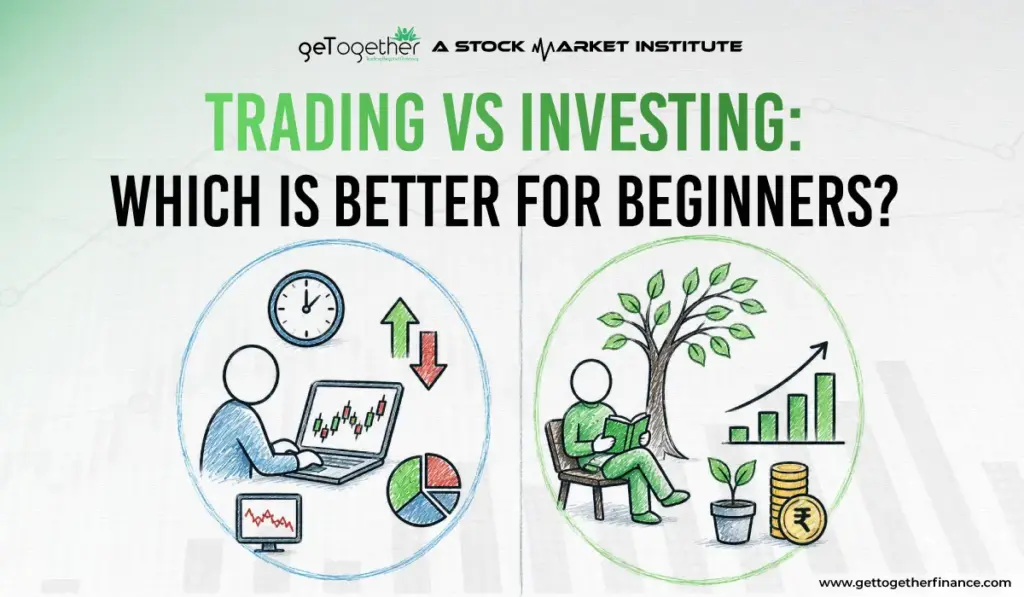
In the stock market, every beginner has same question to ask: trading vs investing, which is better for beginners?
The main aim of both of these approaches is to generate money. But they differ to some extent in terms of time commitment, mindset, strategy, and risk. For you, it is important to understand the difference between trading and investing before putting your money into the market. When you select the right approach, it helps you to build confidence and enjoy your financial journey.
This blog explains stock trading vs investing for beginners in simple words, so you can decide which suits you better.
What Is Trading in the Stock Market?

In the stock market, trading means buying and selling stocks regularly to make money from small price changes. Instead of holding stocks for years, traders want to earn money through buying and selling stocks. Unlike investors, traders are always looking for the right time to buy or sell. For this, they use patterns, charts, and other tools to help them make quick decisions.
For example: A trader buys a stock in the morning and sells it the same day if the price rises. Here, the main goal of this person is to make quick profits without waiting for years.
Types of Trading in the Stock Market
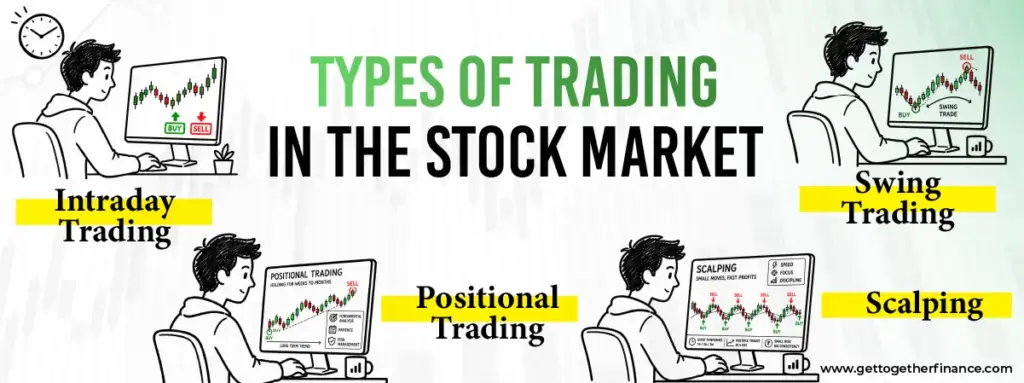
In the stock market, there are different styles through which you can trade. These styles depend on how long you hold a stock before selling it. Each type of trading helps traders make money in different time periods, from a few minutes to many months. By understanding these styles, you can pick an approach that best fits your goals.
- Intraday Trading: In this, stocks are bought and sold on the same day
- Positional Trading: Stocks are kept for weeks or months based on how the market moves
- Swing Trading: In this, stocks are kept for a few days to weeks to earn money from short-term price changes.
- Scalping: Within this type of trading, traders keep buying and selling stocks through the day in order to earn small gains.
Advantages of Trading in the Stock Market

Those people who don’t like to wait, trading is best for them. Not everyone has the patience to hold stocks for the long term. That’s why people choose trading, as it offers several benefits to those who make quick decisions and stay active in the stock market. By using the right strategy and discipline, you can generate returns through trading in a shorter time frame. Here are some benefits given below:
- Frequent trading opportunities: Unlike long-term investors, traders don’t have to wait; they get chances almost every single day. When you use the right strategy and timing, you can get consistent returns.
- Active risk management: In trading, traders hold positions for a short time, which helps them reduce losses. Also, if the market is against you, you can simply change your strategies and act accordingly.
- Engaging and dynamic: Trading is generally good for those people who enjoy making decisions quickly, monitoring markets, and analysing charts. It keeps you active so that you can react fast when the market moves in a different direction and trend changes.
- Opportunity to earn quick profits: Trading allows traders to make profits from small price changes and does not require them to wait for years like long-term investors. Also, they can earn money within minutes, hours, or days.
- Flexibility in different market conditions: Trading gives you the chance to make money whether the market is going up or going down. In long-term investing, you can only profit when stock prices are higher. But in trading, you can use strategies like short selling to earn money even when prices decline. This gives traders more opportunities in different market conditions.
What Is Investing in the Stock Market?

Investing means buying stocks and keeping them for a long time to build your wealth over time. Investors mainly focus on the fundamentals of the company, such as revenue, future growth, and financial position. They do not worry about the changes in prices every day and believe that the business will grow in the future. So they keep their money invested no matter what happens.
For example: An investor buys shares of a strong company and holds them for years. Over time, they make money as the price goes up and also get dividends.
Types of Investing in the Stock Market
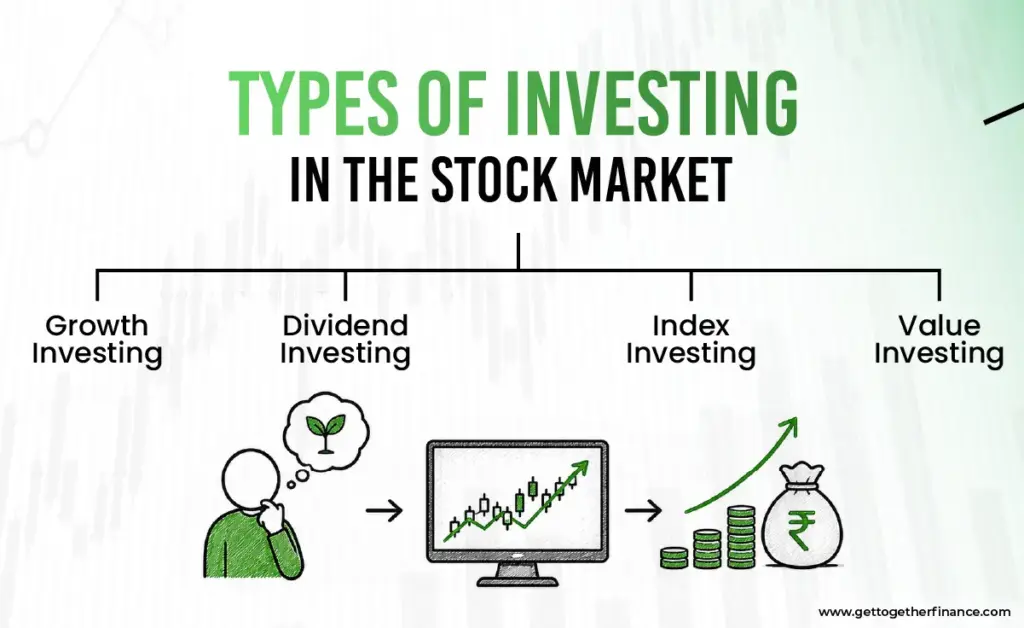
There are different types of ways through which a person can invest their capital. This thing can depend on how much risk you can handle and your financial goals. Each strategy has its own way of building wealth, and by knowing them, you can make better investing decisions.
- Growth Investing: In growth investing, you put your money in those companies that show high potential to grow in the future.
- Dividend Investing: It means buying stocks of companies that pay you a fixed amount of money at regular intervals.
- Index Investing: In this type of investing, you invest in multiple companies at once to reduce risk and maintain stability.
- Value Investing: In this, people find companies whose stock is currently underpriced so that they buy them at a low price and sell when the price rises.
Advantages of Investing in the Stock Market

In the stock market, investing is beneficial for those people who are patient and want to grow their money over time. It focuses on building wealth and, along with this, reducing the stress of constant market monitoring.
- Lower stress and time involvement: In investing, people don’t need to give their whole time to monitor the market, which reduces their stress. Unlike trading, investing is not about making a quick profit but focuses on long-term growth.
- Relatively lower risk: When you invest your money for the long term, you are less affected by daily market fluctuations. This lowers the chances of losing money.
- Suitable for beginners: Investing is simple and can be followed by anyone, which makes it suitable for new learners. Also, it does not require in-depth technical knowledge like trading.
- Helps achieve financial goals: Long-term investing is best when you have big future goals, like retirement, building wealth, etc. Over time, your returns start earning more returns; this is the power of compounding. Also, it builds discipline and helps you plan better, so you can slowly build a strong financial future.
- Better decision-making: As investing is about long-term growth, beginners don’t need to worry about what the market does every day. This keeps them calm and prevents them from panicking when the market declines, and stock prices rise rapidly. When beginners think long-term, they can stick to their plans and stay consistent.
Key Differences Between Trading and Investing

Anyone entering the stock market needs to understand the key difference between trading and investing. The aim of both is to generate profit, but they differ to some extent, like goals, holding period, etc. By knowing these differences, you can choose the approach that aligns with your goals and experience.
| Basis | Trading | Investing |
| Approach | Trading is based on the regular buying and selling of stocks | Investing is based on holding assets over time |
| Time Commitment | It requires continuous monitoring | It requires patience and less frequent monitoring |
| Goal | The main goal of trading is to gain short-term gains | The main goal of investing is to create long-term wealth |
| Analysis Type | It depends on technical analysis | It depends on fundamental analysis |
| Holding Period | The holding period of trading ranges from a few minutes to several weeks | The holding period of investing ranges from years to decades |
| Suitability | It is suitable for experienced traders | It is suitable for beginners |
| Profit Potential | In trading, profit potential is quick but less predictable | In investing, profit potential is slower but has more consistent growth over time |
| Risk Level | It involves a higher risk | It is relatively more stable than trading |
| Frequency of Transactions | In trading, the frequency of transactions is high | In investing, transactions are less frequent |
Difference between Short-Term Trading and Long-Term Investing based on Time Horizon

One of the biggest differences between short-term trading and long-term investing is the time horizon for holding stocks. In short-term trading, traders buy a stock and sell it when the price rises and make a profit. While in long-term investing, people hold stocks for several years in order to gain profits. Within this, their investment grows slowly over time. When you keep your money invested for a longer time, it keeps on growing through compounding. Here, the most important thing to note is: the longer you keep your money invested, the more returns you will get over time.
Skills Required for Trading and Investing

In order to be successful in the stock market, skills also play an important role along with strategy. Trading and investing aren’t the same thing: each one requires different abilities, a different mindset, and time involvement. When you understand these skill requirements, you can choose the right approach for yourself.
For traders, it is important to have these skill sets:
- Technical analysis
- Quick decision-making
- Chart reading
- Emotional control
- Risk management
On the other hand, for investing, it is important to have these skill sets:
- Fundamental analysis
- Future-oriented mindset
- Patience and discipline
- Understanding business models
Can You Do Both Trading and Investing?

Yes, it is possible to do both trading and investing, but only if you use a systematic approach. It is always good to separate your strategies and capital, instead of mixing them. Many people divide their money into two parts. They put a larger portion into long-term investing and a smaller portion into trading. This approach is the best as it allows you to create wealth over time through investing and earn quick profit through trading.
It is advisable for beginners to first build a strong foundation in investing before trading. If they mix trading and investing without having proper knowledge, then it can lead to confusion and bad results
Which Is Better for Beginners?

When we talk about stock trading vs investing for beginners, the better choice depends on your risk-taking abilities, experience, and available time. However, for most beginners, investing is usually the best option to get started. The reason is that it involves lower stress, requires less monitoring, and does not need advanced technical skills at the start. Investing helps you understand how the stock market works over time. This allows you to learn to make quick decisions without any kind of pressure. Over time, investors build wealth and become confident in their decisions.
On the other hand, trading requires quick decision-making, emotional control, and strong technical knowledge. Therefore, you need to start it after getting market experience. If you start investing first, it helps you build a strong foundation. After this, when you feel confident, you can move to trading with more confidence.
Common Mistakes Beginners Make When Choosing Between Trading and Investing

Entering the market without understanding the difference between trading and investing is the biggest mistake most traders make. This led to bad decisions, creating confusion and making unrealistic expectations.
- Chasing quick profits: In today’s world, people love to post their success stories on social media, which leads them to seek quicker profits. As a result, they trade without doing proper analysis and incur heavy losses.
- Mixing trading and investing: Most people believe that trading and investing require the same capital and mindset, which is not true. Investing focuses on long-term goals, whereas trading focuses on short-term ones.
- Ignoring risk management: Several beginners start trading or investing without any plan to protect their money. They forgot to use tools like stop-loss or failed to set criteria for taking losses. This causes substantial losses, erodes their confidence, and wipes out money.
- Lack of knowledge and preparation: The biggest mistake that traders make is starting to trade or invest without having proper knowledge of it. Because of this, the only option that remains for them is to depend on tips, which leads to heavy losses. Also, traders cannot achieve consistent returns.
Conclusion
When we talk about stock trading vs investing, which is better, the answer relies on your experience, goals, and risk-taking capabilities. In the stock market, both investing and trading can help you multiply your money, but they work differently and suit different people. Trading is ideal for those who make quick decisions and track the market, whereas investing is best for cultivating financial growth. If you are new to the stock market, then investing is the best option, as it helps you develop an understanding of the market. Over time, when you become confident, you can start trading.