
Is Technical Analysis Dead in the Age of Algorithmic Trading
- Updated on :
- 26 Views
- by Suhani

 Instagram
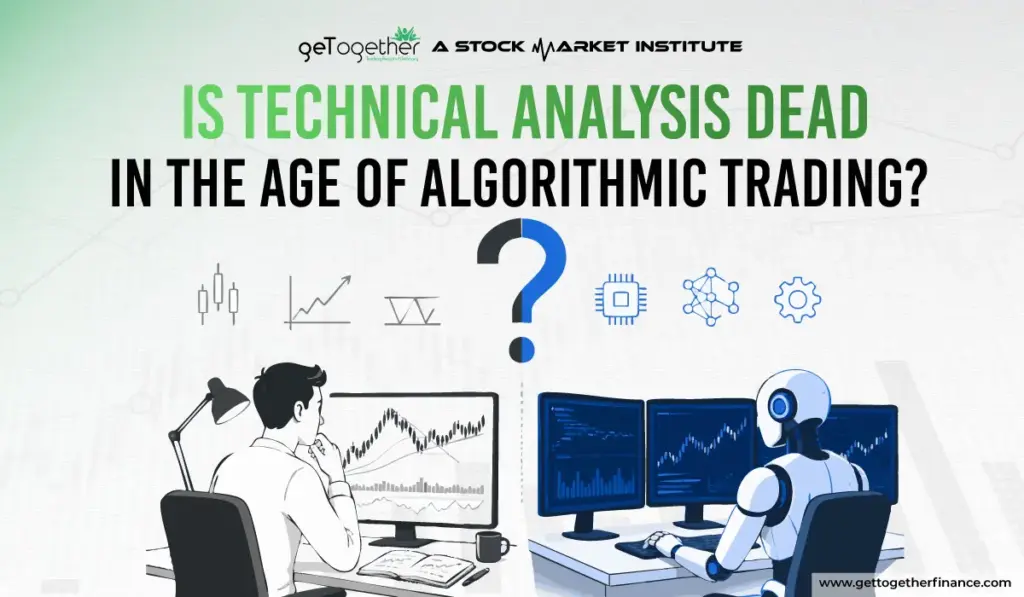
If you have been around trading circles recently, you have probably heard it. Someone says technical analysis is dead or that algorithms have taken over. Charts do not work anymore. And if you are just starting your trading journey, that kind of talk can be confusing and even discouraging.
However, here is the truth. Technical analysis is not dead. Not even close. In fact, the rise of algorithmic trading has made understanding technical analysis more important, not less.
In this blog, we are going to break down everything clearly, from what technical analysis actually is to how algorithms use it every single day, to what your real edge is as a human trader in 2026. Whether you are a complete beginner or someone who has been watching charts for a while, this is written for you.
What Is Technical Analysis? A Quick Refresher for Modern Traders

Technical analysis (TA) is the practice of reading price charts to figure out where the market might go next. Instead of studying a company’s earnings or financial reports, a technical analyst looks at price movement, trading volume, and patterns that repeat over time.
Think of it like reading the mood of the market. Prices move because of human decisions, fear, greed, hope, and panic. Those emotions leave patterns on a chart. Technical analysis is the skill of spotting those patterns before the next move happens.
The most commonly used tools in technical analysis include:
- Support and resistance levels, which are price zones where buying or selling tends to happen repeatedly.
- Moving averages, which smooth out price action to show the overall trend direction.
- RSI (Relative Strength Index), which tells you whether an asset is overbought or oversold.
- MACD (Moving Average Convergence Divergence), which helps spot momentum shifts early.
- Chart patterns like head and shoulders, double tops, flags, and triangles.
- Volume analysis, which confirms whether a price move has real strength behind it.
These are not outdated concepts. They are the same building blocks that modern trading algorithms are built on, and we will show you exactly why that matters.
The Rise of Algorithmic Trading: How Machines Changed the Game
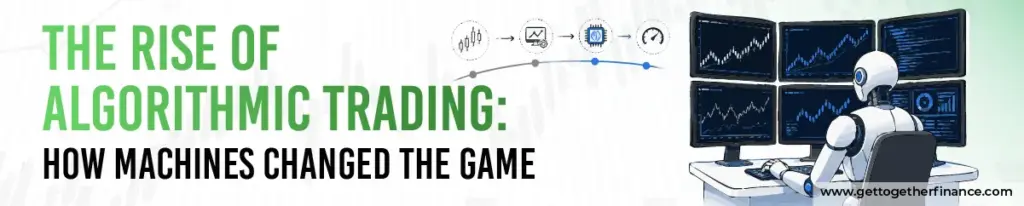
Algorithmic trading, also called algo trading, simply means using computer programs to place trades automatically based on pre-set rules. Instead of a human sitting at a screen and clicking buy or sell, a machine does it, often in milliseconds.
The growth of algo trading has been massive. According to reports from major financial research firms, algorithmic trading now accounts for approximately 60 to 75% of all trading volume in US equity markets. In Europe and Asia, the numbers are similarly high. This is not a niche activity. It is how the majority of modern markets operate.
Algo trading changed the game in a few major ways:
- Speed became a competitive advantage. Algorithms can execute thousands of trades per second, far beyond what any human trader could manage.
- Consistency improved. A machine follows its rules every single time. It does not panic, second-guess itself, or get greedy.
- Market noise increased in short timeframes. With so many algorithms reacting to tiny price changes, intraday charts became harder to read for human traders.
Moreover, this shift created a natural question in many traders’ minds. If machines are doing most of the work, does a human with a chart still stand a chance? The answer is yes, and the reason why is actually rooted in how algorithms are built in the first place.
The Big Myth: “Algorithms Have Replaced Technical Analysts”
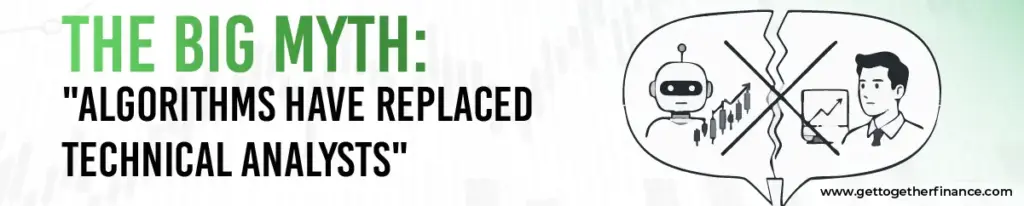
The whole debate around algo trading vs technical analysis falls apart once you understand how algorithms are actually built. This is the part that most people get completely wrong, and it is worth being very direct about.
Algorithms did not replace technical analysis. They are built on top of it.
Every algorithmic trading strategy, from the simplest moving average crossover bot to the most complex quantitative fund, runs on price-based logic. The signals these systems use to decide when to buy or sell come directly from the same concepts technical analysts have been using for decades. Moving averages, RSI levels, volume confirmation, support and resistance zones, momentum shifts. These are the building blocks of algorithmic trading.
The difference is that a machine executes the logic faster and more consistently than a human. However, the logic itself is still technical analysis.
“A good way to think about it: a calculator did not replace mathematics. It just made math faster. Algorithms are the speed. Technical analysis is the thinking behind the speed.”
The myth that algo trading killed TA confuses the tool with the strategy. The algorithm is the vehicle. Technical analysis is what tells it where to go.
5 Reasons Technical Analysis Is Still Alive and Kicking in 2026
If you are still on the fence about whether technical analysis is worth your time in 2026, here are five solid reasons that should clear it up.
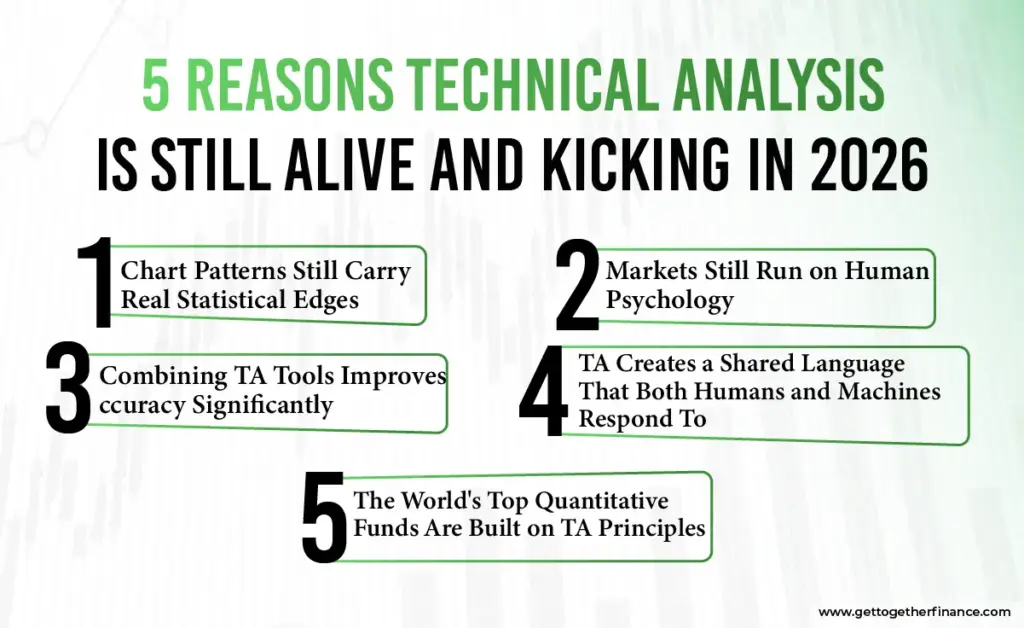
1. Chart Patterns Still Carry Real Statistical Edges
Research by Thomas Bulkowski, one of the most respected names in chart pattern analysis, shows that specific formations carry measurable success rates when applied correctly:
- Head and shoulders patterns show accuracy between 81 and 89 % when properly confirmed.
- Double bottom patterns hit 88 % accuracy in bull market conditions.
- Bullish flag patterns show a reliability rate of around 68 % with volume confirmation.
- Daily and weekly charts produce 15 to 20% better accuracy than short-term intraday charts.
2. Markets Still Run on Human Psychology
Even in a world filled with algorithms, humans are still behind the decisions. Fund managers, portfolio traders, and retail participants all bring emotions to the table. Fear creates selling pressure at predictable levels. Greed pushes prices toward areas where reversals tend to occur. As long as human behaviour drives capital flows, technical analysis will keep capturing those patterns on a chart.
3. Combining TA Tools Improves Accuracy Significantly
Using RSI and MACD alongside a chart pattern improves entry and exit accuracy by up to 31 %. That is a real and repeatable edge. Besides, algorithms apply this same logic by requiring multiple indicators to align before triggering any trade. A retail trader who builds the same discipline into their approach is using a method that even the biggest quantitative funds rely on.
4. TA Creates a Shared Language That Both Humans and Machines Respond To
Support and resistance levels are watched by algorithms and human traders alike. When the price approaches a key level that thousands of participants are monitoring, reactions tend to happen at those zones. The more market participants are looking at the same levels, the more those levels become genuine turning points. Technical analysis is the common framework that everyone operates within, whether they realize it or not.
5. The World’s Top Quantitative Funds Are Built on TA Principles
Renaissance Technologies, Two Sigma, and Citadel did not throw technical analysis away when they built their systems. They embedded it inside sophisticated algorithms. The core inputs are still price, volume, momentum, and trend. The technology changed, the foundation did not.
How Algo Trading Actually Relies on Technical Analysis Principles?
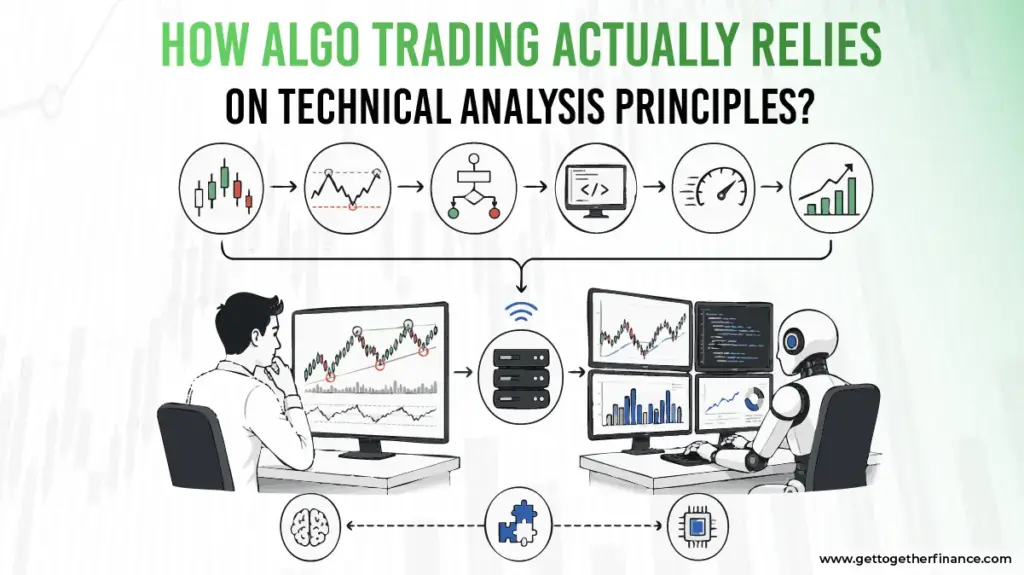
This is worth being specific about because many traders do not realise how directly algorithms use the same tools they are already familiar with. Let us go through the most common ones.
- Moving averages are among the most commonly coded signals in algo systems. A classic setup is when a short-term EMA crosses above a long-term moving average, which triggers a buy. The reverse triggers a sell. Investopedia describes this as one of the most widely used and simplest forms of algorithmic strategy in existence.
- RSI is standard in algo strategies. Systems buy when RSI drops below 30 and starts recovering, signalling that an asset is climbing out of oversold territory. They sell when RSI rises above 70 and begins to turn. RSI in an algorithm is doing exactly what RSI does on your chart.
- MACD is used by algorithms to spot momentum shifts early. When the MACD line crosses above its signal line, it acts as a bullish trigger used across countless automated strategies.
- Fibonacci retracement levels are coded into many systems as expected support and resistance targets. Because so many algorithms watch the same Fibonacci zones, price reactions at those levels tend to become self-reinforcing.
- Volume confirmation is built into well-designed algorithms as a filter. A breakout on high volume gets treated very differently from one on thin volume. Experienced technical traders read charts the same way.
Where Technical Analysis Struggles in an Algo-Driven Market?
It would not be fair or accurate to say technical analysis has zero limitations. There are real challenges worth knowing about, especially as a trader entering today’s market.
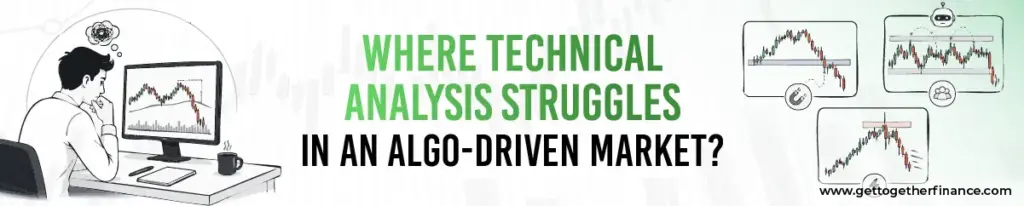
- Simple, widely known patterns get eroded over time. When every trader and algorithm is watching the same basic moving average crossover, institutions can exploit that predictability. The more popular a setup becomes, the more likely it is to be front-run before a retail trader can act. However, this does not mean technical analysis stops working. It means the obvious, lazy applications of it stop working. More nuanced setups with multiple confirmations hold up much better.
- Overfitting is a real problem for algorithmic strategies. Many traders tweak their strategies so heavily on historical data that the approach collapses in live markets. Research shows that the average algorithmic strategy needs significant updates every 18 to 24 months because markets change. Your technical analysis approach needs the same kind of regular review.
- Technical analysis does not handle sudden, unpredictable events well. A major geopolitical development, an unexpected interest rate decision, or a flash crash does not show up in a chart before it happens. No indicator predicts what no one sees coming. This is a real limitation, and knowing it matters for how you size positions and manage risk.
The takeaway is not that TA is broken. The takeaway is that using a single indicator with no confirmation and no risk management is what gets traders hurt. The bar has simply gone up, and that is actually a good thing for serious traders.
Human Trader vs Algorithm: What’s Your Real Competitive Edge?
Let us be honest about one thing right away. You are never going to beat an algorithm on speed. That race is over for retail traders. Competing on reaction time is simply the wrong game to play.
However, speed is not the only thing that matters in trading.
As a human trader, your real edge is in context. Algorithms are bounded by the rules they were built with. They can identify an RSI divergence, but they struggle to factor in a surprise central bank decision, a sudden shift in market sentiment, or the kind of broad picture reading that comes naturally to an experienced trader.
Besides that, here is where human traders genuinely have an advantage:
- Flexibility: Markets cycle through different conditions, as sometimes they trend strongly and sometimes they move sideways for weeks. Algorithms are typically built and optimized for specific conditions and take time to adapt. A skilled human trader can recognise a shift and adjust in real time.
- Patience: Waiting for genuinely high-probability setups instead of forcing trades out of boredom or fear of missing out is something high-frequency systems are not designed to do. Selectivity is a real edge that human traders can use when they choose to.
- Judgement: Humans can weigh qualitative factors, like news tone, geopolitical tension, and market narrative, alongside the technicals. Algorithms struggle with that kind of layered thinking.
So the right frame is not human versus algorithm. The smarter approach is using TA to identify setups, understanding how algorithms tend to behave around key levels, and then making decisions that account for both. That combination is where the genuine edge lives in today’s market.
How to Adapt Your TA Skills for Today’s Market Conditions

Understanding algo trading vs technical analysis as a combined skill set, not opposing forces, is what separates sharp traders from struggling ones. The core of technical analysis has not changed. However, how you apply it needs to match where markets are right now in 2026. Here is what that looks like in practice.
- Trade higher timeframes whenever possible. Daily and weekly charts are 15 to 20% more accurate than hourly charts. Short-term price action is heavily influenced by algorithm activity and noise. Stepping back and letting clean setups form on higher timeframes gives you a much clearer picture.
- Always require more than one signal before entering a trade. A chart pattern plus RSI confirmation plus a volume increase is a far stronger case than any single indicator on its own. Research shows combining these tools can improve accuracy by up to 31 %.
- Pay close attention to volume on every move. Volume tells you whether a breakout has real participation behind it or whether it is likely a false move. A breakout on above-average volume tends to follow through. A breakout on thin volume tends to reverse.
- Keep the broader context in mind at all times. Is the market trending or ranging? Is there a major economic event ahead? Are you trading in line with the bigger picture or against it? TA signals that align with the overall market context carry much more weight than isolated setups going against the broader trend.
- Review your approach regularly. Markets evolve. What worked two years ago may need adjusting today. Traders who keep adapting are the ones who stay relevant. Traders who stay rigid tend to fade.
Moreover, do not overlook algo trading vs technical analysis as a learning framework. Understanding how algorithms think and trade around key technical levels can actually help you make better decisions as a human trader. When you know an algorithm is likely to react at a certain RSI level or a key support zone, you can position yourself more intelligently around that expected behaviour.
Conclusion: Should You Still Learn Technical Analysis in 2026?

Yes. Without any doubt.
Technical analysis is not a relic from the past that algorithms have made irrelevant. It is the actual foundation that modern algorithmic trading is built on. The most profitable quantitative funds in the world did not abandon TA. They put it inside a machine and ran it at a scale no human could match manually.
Learning technical analysis gives you the ability to read what a market is doing in real time. It gives you a clear framework for finding entries, managing risk, and knowing when to stay out entirely. That kind of structured thinking is just as valuable for a retail trader in 2026 as it was 30 years ago.
Technical analysis is very much alive. It will continue to be the language of price action for as long as markets exist. The only thing that changes is how well you learn to use it.
So if you are just starting your trading journey or looking to sharpen the skills you already have, start with the basics of technical study. Understand how price moves. Learn to read a chart, and then, as you grow, start learning how the algo trading vs technical analysis relationship actually works in your favor, not against you.