
Risk-Reward Ratio in Trading: How to Calculate It Before Every Trade
- Updated on :
- 13 Views
- by Juhi Sharma

 Instagram
 Linkedin
Most new traders learn one lesson the hard way. You enter a trade feeling confident, the price moves against you, and you keep holding on, hoping it will turn around. By the time you finally sell, you have lost far more than you ever planned to. This happens because there was no plan in the first place. There was no number written down for how much you were willing to lose, and no number for how much you were hoping to gain.
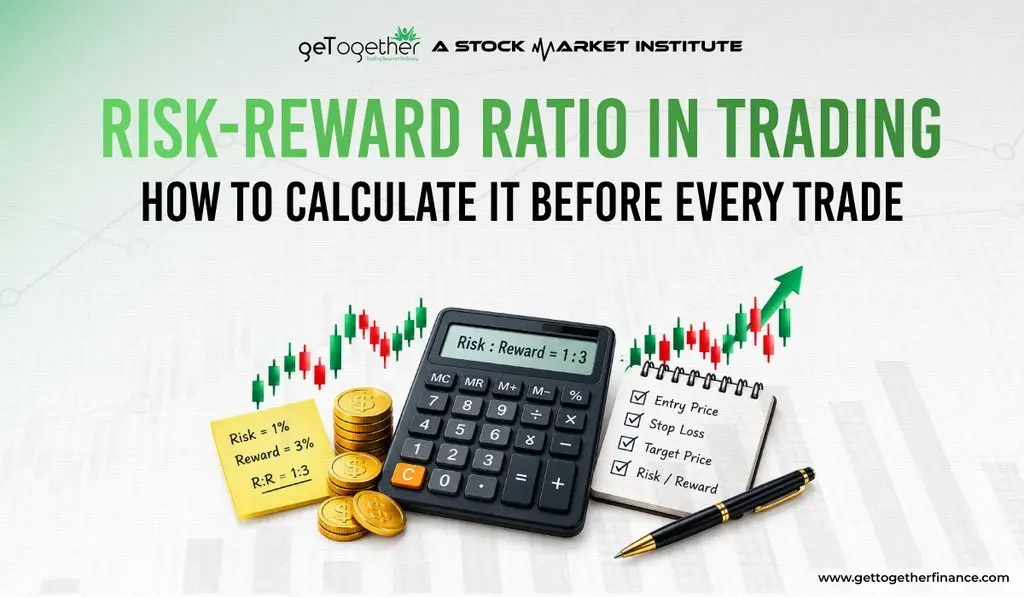
That is exactly what the risk-reward ratio fixes. It is a simple habit that forces you to answer two questions before you enter any trade: how much am I risking, and how much am I trying to make? Once you get into this habit, trading starts to feel a lot less like guessing and a lot more like running a small, well-managed business.
In this blog, we will go through the formula, walk through real examples using real stocks, and show you exactly how professional traders use this one idea to stay in the game for years while others burn out in a few months.
What Is the Risk-Reward Ratio in Trading?

The risk-reward ratio simply compares two things. The money you could lose on a trade if it goes wrong, and the money you could gain if it goes right. That’s it. It is not a complicated formula from a finance textbook. It is closer to common sense that most people forget to apply once real money is on the line.
Here is a real example that many Indian traders still remember. In January 2023, Adani Enterprises was trading close to ₹3,400 when the Hindenburg Research report came out. Within days, the stock kept falling, and within a few weeks it had dropped to under ₹1,200.
Anyone who was holding the stock without a stop-loss watched a huge chunk of their money disappear in a matter of days. Now think about a trader who had decided beforehand, “If this stock falls below a certain point, I am getting out, no questions asked.” That one decision, made calmly before the storm, could have saved a large part of their capital.
This is the whole point of the risk-reward ratio. It is not about predicting the market correctly every single time. Nobody can do that, not even the biggest fund managers in the world. It is about making sure that when you are wrong, you lose a small, known amount, and when you are right, you gain enough to make all those small losses worth it.
Now let’s get into the actual formula so you can start putting a number on your own trades.
Risk-Reward Ratio Formula

The formula looks intimidating the first time you see it written in a textbook, but once you break it down, it is really just two subtractions and one division.
Risk-Reward Ratio = Risk divided by Reward
To use this, you need to fix three prices in your mind before you place the trade. Your entry price, your stop-loss price, and your target price.
How to Calculate Risk?
Your risk is simply the gap between where you buy and where you have decided to exit if things go wrong.
Risk = Entry Price minus Stop Loss Price
How to Calculate Potential Reward?
Your reward is the gap between where you buy and where you plan to book profit if the trade works in your favor.
Reward = Target Price minus Entry Price
Once you have both these numbers, you compare them, and that comparison tells you if the trade is even worth taking.
Risk-Reward Ratio Example
Let’s say you decide to buy shares of Tata Motors at ₹500. You set your stop loss at ₹480 because you don’t want to lose more than that if the trade turns bad. You set your target at ₹560, based on where the stock has struggled to move past before.
Risk = 500 – 480 = 20 rupees
Reward = 560 – 500 = 60 rupees
Risk-Reward Ratio = 20 to 60, or simply 1 to 3
In simple words, for every 20 rupees you are putting at risk, you are hoping to earn 60 rupees. Most seasoned traders would call this a fair setup worth taking.
What Does 1:2 Risk-Reward Mean?
A 1:2 ratio means you are risking one part to make two parts in return. So if you are willing to lose ₹1,000 on a trade, your target profit should be around ₹2,000. Many traders treat 1:2 as the bare minimum for a trade to be worth their time, because it still leaves them room to be wrong quite often and still come out ahead.
Once the formula makes sense on paper, the real skill is applying it before you actually place the order, not after the trade has already gone wrong.
How to Calculate Risk-Reward Ratio Before a Trade?
This should always happen before you buy or sell, never after. Here is the process, step by step.
Step 1: Identify Your Entry Price
This is the price at which you are planning to enter the trade. It should come from something you have actually studied, like a chart pattern or a level the stock has respected before, not just a random number that felt right at the time.
Step 2: Determine Your Stop-Loss
Decide the exact price where you will admit the trade did not work and walk away. A sensible stop-loss usually sits just below a recent low or below a level where buyers have stepped in before.
Step 3: Determine Your Profit Target
Fix a price where you will book your profit if things go your way. This should be based on a real resistance level or a previous high the stock has struggled to cross, not a number you picked just because it sounds nice.
Step 4: Calculate Potential Risk
Subtract your stop loss from your entry price. This is exactly how much money you are putting on the line.
Step 5: Calculate Potential Reward
Subtract your entry price from your target. This tells you what you stand to earn if the trade plays out the way you expect.
Step 6: Compare Risk and Reward
Now simply compare the two. If your possible reward is at least double your possible risk, the trade generally makes sense. If the reward is smaller than the risk, it is worth asking yourself why you even want to take this trade.
Once this becomes a habit, it barely takes a minute to do, but it saves you from most of the painful mistakes that wipe out beginner traders.
Risk-Reward Ratio Examples

Numbers always make more sense once you see them applied to real situations. Here are a few common ratios explained side by side.
1:1 Risk-Reward Example
You risk ₹50 to make ₹50. If you take ten trades like this, you would need to win more than half of them just to stay ahead, especially once you count brokerage charges. This ratio is usually not considered strong enough on its own.
1:2 Risk-Reward Example
You risk ₹50 to make ₹100. Here, you only need to win around 34 out of every 100 trades to break even, which gives you a lot more room to be wrong.
1:3 Risk-Reward Example
You risk ₹50 to make ₹150. Now you only need to win 25 out of every 100 trades just to stay flat. This is why 1:3 is such a popular target among experienced traders.
1:5 Risk-Reward Example
You risk ₹50 to make ₹250. This kind of ratio usually shows up in swing trading, where a stock has to run for weeks. You would only need to win about 17 out of every 100 trades to break even, which is a very forgiving number.
These examples show why the ratio matters so much. But even a great ratio does not guarantee success on its own, and that brings us to a question every trader asks sooner or later.
What Is a Good Risk-Reward Ratio in Trading?
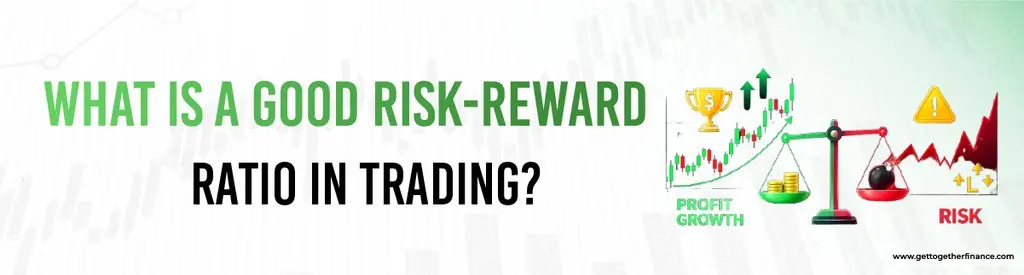
A good risk-reward ratio is usually anything at 1:2 or higher, meaning your reward is at least twice your risk. Many professional traders push for 1:3, since it gives them a bigger safety net when things do not go as planned.
There is no single perfect number that works for everyone, though. It depends on how you trade, what you trade, and how often your setups actually work out. This is exactly why win rate needs to be talked about alongside the ratio, not separately.
Risk-Reward Ratio vs. Win Rate
Your win rate is simply the percentage of trades that end in profit. On its own, this number can be misleading. A trader who wins seven out of every ten trades but risks much more than they gain on each one can still end the month in a loss. The ratio and the win rate always need to be looked at together.
Can You Be Profitable With a Low Win Rate?
Yes, and this surprises most beginners. A trader using a 1:4 ratio only needs to win 20 out of every 100 trades to break even. Everything above that is pure profit. This is why some very successful traders are perfectly fine losing more often than they win, as long as their winners are large enough to more than cover those losses.
How Win Rate and Risk-Reward Work Together?
Think of these two as a pair, not rivals. A high win rate paired with a poor ratio can still lead to losses over time, while a modest win rate paired with a strong ratio can lead to steady growth. There is no single right combination, only the one that fits your patience and your trading style.
Breakeven Win Rate for Different Risk-Reward Ratios

Here is a quick table showing how much you need to win just to avoid losing money, based on your ratio.
- 1:1 ratio needs close to a 50% win rate to break even
- 1:2 ratio needs close to a 34% win rate to break even
- 1:3 ratio needs close to a 25% win rate to break even
- 1:4 ratio needs close to a 20% win rate to break even
- 1:5 ratio needs close to a 17% win rate to break even
Seeing these numbers laid out really shows how much easier your job becomes once your ratio improves. From here, the next natural step is to look at expectancy, which brings both these ideas together into one final number.
Risk-Reward Ratio and Trading Expectancy
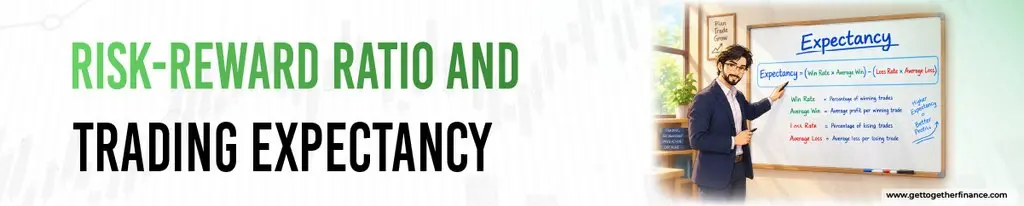
Trading expectancy tells you what you can expect to earn, on average, from every trade you take over time. It brings your win rate and your risk-reward ratio together into a single figure.
Expectancy = (Win Rate multiplied by Average Win) – (Loss Rate multiplied by Average Loss)
Take Yes Bank as an example from March 2020, when the stock crashed from around ₹36 to under ₹10 in a matter of days after the RBI stepped in with a reconstruction plan. A trader who had a habit of cutting losses quickly and only holding onto positions that worked in their favour would have survived that crash with a small, planned loss.
A trader who never thought about expectancy or ratios would have taken a devastating hit. Expectancy is what turns the whole idea of risk-reward from a nice theory into a real, working number that tells you if your trading style makes money or slowly drains it.
Why a High Risk-Reward Ratio Does Not Automatically Mean a Better Trade?

It’s tempting to think that chasing a 1:10 ratio is always smarter than settling for 1:2. In reality, an oversized target often sits nowhere near any real resistance on the chart, which means the stock may simply never get there. You end up holding a trade far longer than you should, watching a smaller, realistic profit slip away while waiting for a target that was never grounded in anything.
A strong risk-reward ratio only means something when the target is based on real support and resistance, real trend strength, and real market conditions. Chasing an oversized ratio just because it looks good on paper usually leads to lower win rates and a lot more frustration, not more money in your account.
How to Set Stop-Loss and Take-Profit Using Risk-Reward?

The most reliable way to place your stop-loss and target is to look at the chart, not at what number would make your ratio look nice. Place your stop loss just beyond a recent swing low or high, or just outside a level where the stock has bounced or reversed before. Then look for the next real resistance or support level in the direction of your trade to decide your target.
Once both these levels are marked, work out the ratio between them. If it does not meet the minimum you are comfortable with, usually 1:2, you have two honest options. Skip the trade, or wait patiently for a better entry point that naturally improves the ratio. What you should never do is drag your stop loss further away just to make the ratio look better on paper, because all that does is increase your real risk while giving you a false sense of safety.
Also Read: What is a Stop-Loss Order and How To Use It
Risk-Reward Ratio Across Different Trading Styles
The ideal ratio changes depending on how long you plan to hold your trade and how your strategy is built.
Scalping
Scalpers hold their trades for just seconds or minutes, aiming for tiny, quick moves. Their ratio is often close to 1:1 or 1:1.5, but they make up for it with a very high win rate and a large number of trades every single day.
Day Trading
Day traders usually look for something between 1:2 and 1:3 within a single session. Since every position gets closed before the market shuts for the day, the target has to be something realistic within those few hours.
Swing Trading
Swing traders hold positions for several days or a couple of weeks, which gives the price a lot more room to move. A ratio of 1:3 or better is common here, since these trades are based on bigger chart patterns and bigger expected moves.
Position Trading
Position traders hold for months, sometimes years, riding out a major long-term trend. Their ratio can stretch to 1:5 or even higher, since one big trend can generate returns large enough to cover several smaller losses picked up along the way.
No matter which style you follow, the habit of working out your ratio before entering stays exactly the same. Only the size of the numbers changes.
Common Risk-Reward Mistakes

Even traders who understand this concept well can slip into habits that quietly ruin their edge over time. Here are the ones to watch out for.
Moving the Stop-Loss
Pushing your stop-loss further away after entering a trade, hoping the price will turn around, is one of the fastest ways to turn a small, planned loss into a large, painful one. Once your stop loss is set based on proper analysis, respect it, no matter how tempting it feels to give the trade “a little more room.”
Setting Unrealistic Profit Targets
Placing your target far beyond any real resistance level just to make your ratio look impressive on paper only sets you up for disappointment. The market does not care what ratio you wrote in your notebook. It only moves where actual buying and selling pressure takes it.
Ignoring Fees and Slippage
Brokerage charges, taxes, and the small gap between the price you expected and the price you actually got all eat into your profits quietly. A ratio that looks like 1:2 on paper can shrink to something closer to 1:1.7 once these real costs are added in, so always keep this in mind while judging whether a trade is truly worth taking.
Choosing the Ratio Before Analysing the Market
Deciding you want a 1:3 ratio first, and then forcing your stop loss and target to fit that number, is doing things backward. The chart, the support levels, and the resistance levels should always come first. The ratio should simply be the result of that honest analysis, never the starting point.
Risk-Reward Ratio Calculator
If working this out by hand feels repetitive, a risk-reward ratio calculator can save you time. You enter your entry price, your stop loss, and your target price, and it instantly shows you the ratio along with the win rate you would need to break even. Most trading platforms and broker websites offer one of these for free, and using it regularly helps turn this habit into something you do without even thinking twice, on every single trade.
Key Takeaways: Risk-Reward Ratio in Trading

- The risk-reward ratio compares how much you could lose on a trade against how much you could gain, and this should always be worked out before you enter, never after.
- The formula is simple: divide your risk, which is entry price minus stop loss, by your reward, which is target price minus entry price.
- A ratio of 1:2 is usually seen as the bare minimum worth taking, while 1:3 or higher gives you a much bigger safety margin.
- A stronger ratio lowers the win rate you need just to break even, which is exactly why some traders profit while winning less than half their trades.
- Trading expectancy brings your win rate and your risk-reward ratio together to show whether your overall approach is genuinely making money.
- A very high ratio is not automatically better if the target is unrealistic and the price never actually reaches it.
- Always set your stop loss and target based on real support and resistance levels on the chart, not random numbers picked just to create a nice looking ratio.
- Different trading styles call for different ratios, from tighter ones in scalping to much wider ones in position trading.
- Watch out for common mistakes like moving your stop loss, chasing unrealistic targets, ignoring fees, and fixing your ratio before you have even studied the chart.
- Real market events, like the Adani Enterprises crash in 2023 or the Yes Bank crash in 2020, are strong reminders of why a fixed stop loss and a clear risk-reward ratio matter far more than trying to predict the market perfectly.