
Implied Volatility: Meaning, Impact & Options Pricing
- Updated on :
- 4616 Views
- by Arun Singh Tanwar

 Facebook
 Instagram
 Youtube
 Linkedin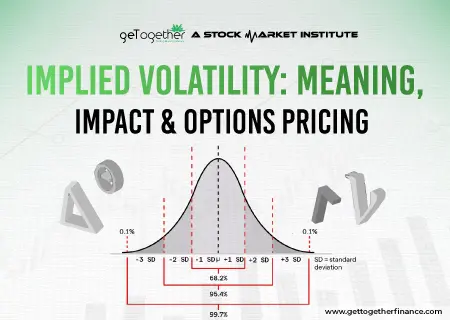
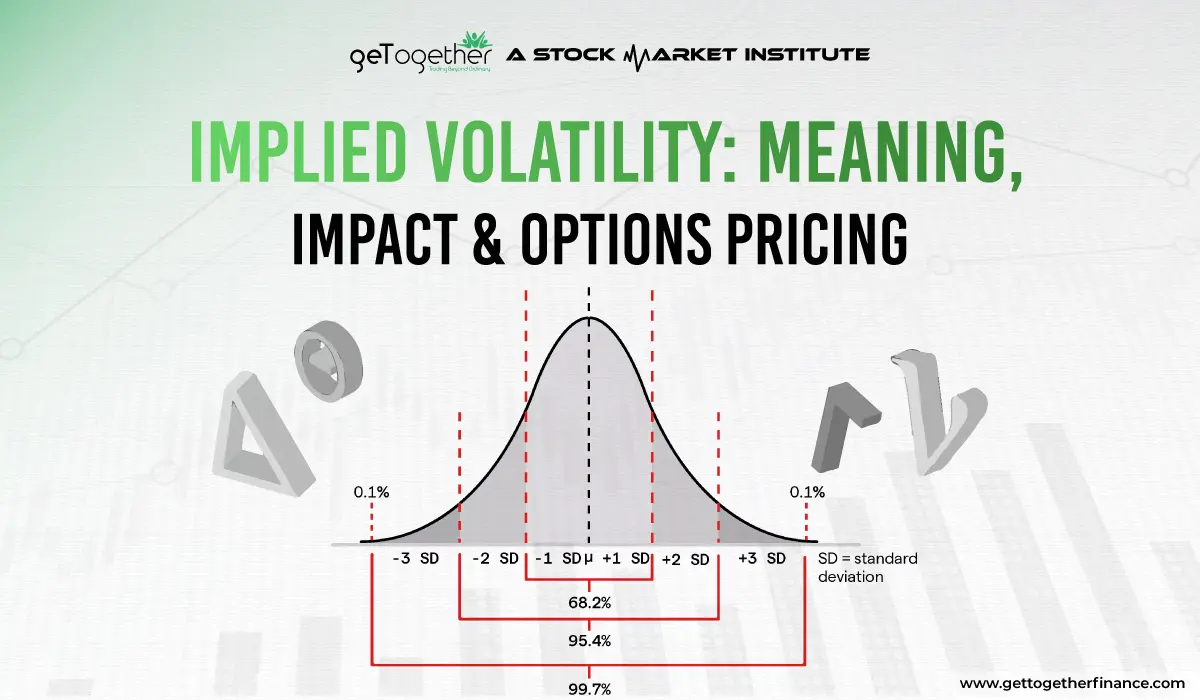
If I say “Change in implied volatility can have a greater impact on an option’s premium than the effects of delta, gamma, theta and rho combined” Sounds surprising?
But it’s true.
You may hear financial talking heads say, “Volatility is high, so the market is going to bounce or the volatility is low, hence the market is due for a sell-off”. Many might say that volatility sets where the market is going and bends its direction. However, volatility doesn’t change the direction of the market, rather helps a trader opt the suitable and perfect trading strategy. There is also a saying that “change “in IV can have a more significant impact on option’s premium than options “Greeks”. But how?
Have you noticed some time we pay too much premium for an options and sometime we get the same option with same strike considering same time left in expiry but still option’s premium is low, this is just because of volatility.
Lost in the financial textbooks for years, the term “Volatility” has always been a crucial tool when it comes to trading, especially for options trading. There are several secrets of trading hidden within this crazy, old concept of IV that can change the way you see the options trading. Let’s dive deeper in this concept:
What is Volatility? Historical vs Implied Volatility Explained
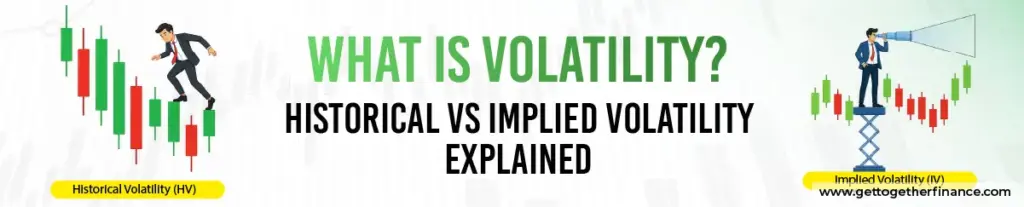
Volatility is the rate at which the price of a stock increases or decreases. High volatility means the price moves up and down a lot, whereas low volatility means the stock price remains stable.
There are mainly two types of volatility:
Historical Volatility (HV): It measures earlier price moments of stocks. Historical Volatility uses past data to assess the level of price fluctuations.
Implied Volatility (IV): It measures how much the market expects the price of a stock to move in the future. Implied Volatility is calculated using the option price to estimate the future movement of stocks.
You can better understand these two through the table given below:
| Basis | Historical Volatility | Implied Volatility |
| Based On | Historical price movements | Option prices and market expectations |
| Nature | Backward-looking | Forward-looking |
| Calculation | Calculated using historical price data | Calculated using option pricing methods |
| Affected By | Past market movements | Economic developments, news, earnings, and market sentiment |
| Use in Trading | Used to understand the historical behavior of stocks | Used to assess option prices and identify the right strategies |
| Purpose | Helps traders examine price fluctuations in the past | Helps traders predict potential market fluctuations |
What is Implied Volatility (IV)?
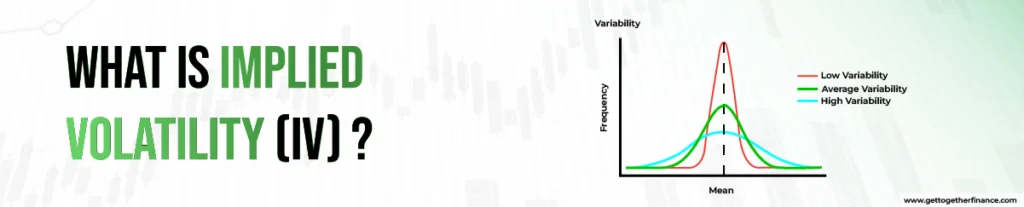
Often abbreviated as IV, implied volatility, is a finance concept used in the world of options and stocks. It is like a mood indicator for the market, showing if traders are calm or in panic mode. When panic rises, IV goes up, making options more expensive. In calm times, IV drops, and options become more affordable.
Implied Volatility (IV) isn’t a guaranteed thing, but it’s useful for traders to decode statistical ranges, aiding in risk management and buying power considerations.
Some traders mistakenly assume that volatility is based on the stock price’s directions. Not really! It simply considers the amount of stock price fluctuations, based on the market sentiment, without regards for direction.
- High IV = Expensive option premiums, due to increased panic. Traders expect big price movements.
- Low IV = Cheaper option premiums, as the market remains calm, hence no significant change in option price.
One thing to keep in mind: implied volatility is all about market sentiment and predictions – it doesn’t care about the nitty-gritty details of a company.
Key Takeaways:
- Implied volatility helps traders read market moods, guiding them on whether it’s a good time to buy stocks.
- IV responds to news and events, shaking up market sentiments and impacting options prices.
- IV doesn’t steer stock price direction, but it’s your buddy in assessing how risky or cool trading in the market might be.
How Implied Volatility (IV) Works: A Practical Breakdown
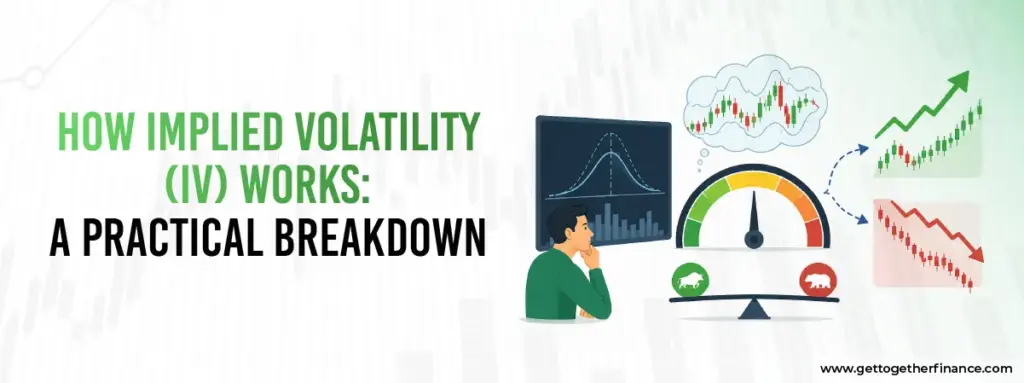
Implied Volatility (IV) represents how much the stock price is expected to move in the future. It is calculated using option prices and highlights market expectations.
Traders expect a significant change in the stock price because of a crucial event, such as vital news or announcements. They buy more options, which increases option prices and Implied Volatility (IV).
When the market is calm, traders do not expect any big changes in the stock prices. This decreases the demand for options, which leads to a decline in IV and option premiums.
For example: The stock of a company at ₹1,000 is about to declare its earnings. Traders expect that the price will move significantly, so they buy more options. This increases the prices of the options and leads to a rise in implied volatility.
How Implied Volatility Affects Option Premiums?
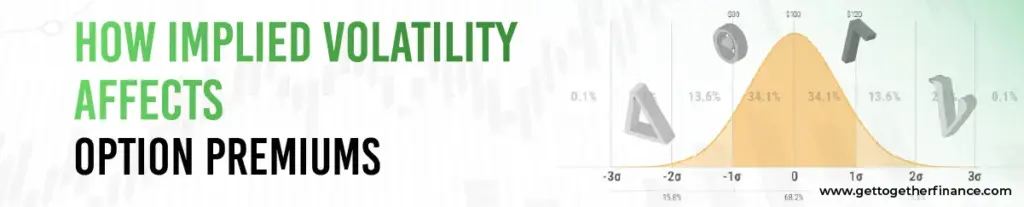
Implied Volatility (IV) is a crucial factor that drives option prices. It indicates how much traders believe a stock’s price may increase or decrease during a particular period.
- When IV increases, the market expects bigger price changes; that’s why option premiums become costlier.
- When IV decreases, the market expects minimal price changes; that’s why option premiums become cheaper.
For example: The stock of a company at ₹2,000 is about to declare its earnings. Traders expect that the price will move significantly, which leads to rise the implied volatility.
Options Pricing Models That Use Implied Volatility (Black-Scholes & More)
Options pricing models are methods that help traders find the fair price of an option. These models rely on some factors such as implied volatility, stock price, time to expiration, and strike price.
Implied volatility (IV) is crucial in this model because it represents how much the stock price is expected to move in the future, which directly influences option pricing.
- Black-Scholes Model: It is a very common model that traders use to calculate an option’s price. The black-scholes model includes some factors like strike price, interest rates, implied volatility, time to expiration, and stock price to measure the value of options.
- Binomial Option Pricing Model: It is a method that predicts option prices by considering various future stock price scenarios. The binomial option pricing model is generally used to calculate the price of American-style options.
- Monte Carlo Simulation Model: It uses different simulated stock price situations to estimate the value of options. The Monte Carlo simulation model is mainly used for more advanced options.
Impact of Implied Volatility on Your Trades
Implied Volatility (IV) impacts both option prices and the profit or loss you make. It represents how much the market expects a stock to move up or down.
Even if the stock price remains the same, the option price can still vary because Implied Volatility (IV) changes. You can understand how IV impacts options under three main conditions:
1. High IV
- Options become costlier
- The possibility of a quick decline after major developments
- More profitable for option sellers
2. Low IV
- Options become cheap
- More ideal for option buying
3. IV Crush
Option prices decline sharply
Occurs after major events like earnings reports
IV falls rapidly
Also Read: Volatility Index
Pros and Cons of Using Implied Volatility (IV)

IV helps calculate the market sentiments to know the market movement size but surely doesn’t tell the direction stories. Used by option writers to price options contracts, various investors consider it before investing in any asset. In case of higher IV, they prefer to go with safer products or sectors.
Here major advantages and disadvantages of implied volatility:
| Advantages | Disadvantages |
| Provide insights of market sentiments and expectations. | Can be subjective based on trader’s sentiments. |
| Affect options pricing and help traders assess risks. | Highly sensitive, can change rapidly making it hard to predict. |
| Valuable tool for options strategies and risk management. | Predict movement but don’t predict the price direction. Result depends on personal biases. |
Implied Volatility vs Realized Volatility: Key Differences
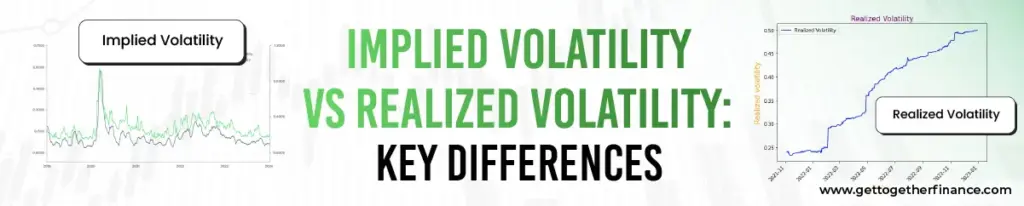
There are two key measures, implied volatility and realized volatility, that traders use to evaluate market volatility. Both are related to price movements, but they have different meanings and uses. Let’s understand the difference between Implied Volatility and Realized Volatility from the following table:
| Basis | Implied Volatility | Realized Volatility |
| Meaning | What the market predicts for the future | What actually happened in the past |
| Type | Future | Past |
| Shows | Expected price movement | Actual price movement |
| Changes with | Sentiment, major news, and events | Real price changes |
| Based on | Option prices | Historical price movement |
| Direction | Future-oriented | Past-oriented |
How to Use Implied Volatility (IV)
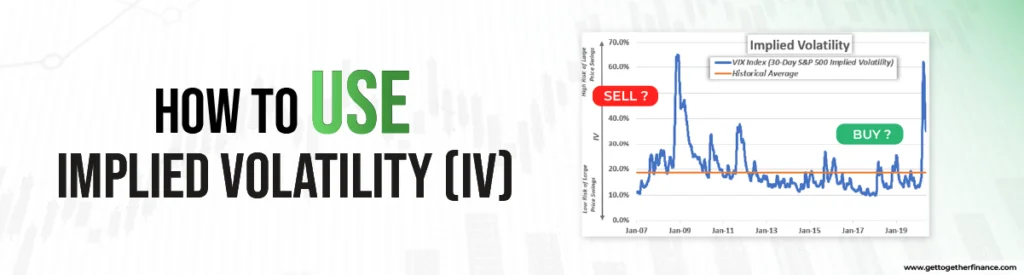
Implied volatility helps investors figure out how risky a stock option is. Imagine two stock options: one with high implied volatility (IV) and another with low IV. The high IV options are like a roller coaster, more likely to surprise you, so you might invest less if you’re not a fan of big surprises. Expert traders recommend not buying options during the time of high IV. For options traders, a spike in IV could be a chance to sell options, like selling tickets when demand is high. If IV drops, it’s like a sale, so buying options might be a good idea.
IV is also optimized to hedge a cash position. For instance, if the current IV of your stock is relatively lower than IV of the whole year, you can buy those options at a low premium and watch it grow. When the IV goes up, the premium value increases, pushing the overall option value upward.
You can plan an option trade using IV. For example, if the option is trading with high volatility, you should avoid buying securities or sell securities as the market is fluctuating based on marketplace panic. As IV goes up, the option premium becomes more expensive, hence it is not a good buying choice and you can plan to sell. Implied volatility helps you determine which options’ value is more likely to go up so a trader can plan their entry/exit by calculating IV charts.
Vice versa, if the IV goes down, that’s a good sign that the market has gone to its constant. You can buy your options and watch it rise and flourish with time. These are ideal conditions to sell options and enjoy benefits with minimal risk of losing your money.
Factors Affecting Implied Volatility
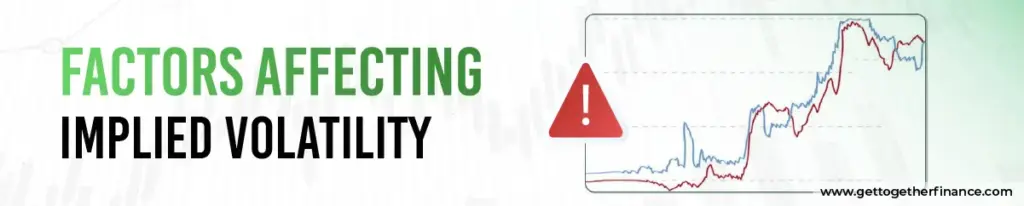
The significant factors that affect the implied volatility are the market sentiments, news, corporate actions, fear, time of expiration, economic events, market liquidity, etc.
Implied volatility can change suddenly and is mainly influenced by the number of active traders or major events happening or affecting the stock marketplace.
When many people want an option, its price rises, and so does the implied volatility. This makes the option more expensive due to the added risk.
Conversely, if there are plenty of available options but few buyers, implied volatility decreases, and the option becomes cheaper.
The time remaining until the option’s expiration also plays a role. Short-term options typically have lower implied volatility, while long-term ones tend to have higher implied volatility. This difference is related to the amount of time available for the price to potentially move in a favorable direction compared to the strike price.
Inflated vs Deflated Options: How to Use IV to Spot Them
The classification of options as costlier or less expensive is determined by the degree of implied volatility (IV) in the market. When implied volatility (IV) increases, option premiums rise significantly and are known as inflated options. When implied volatility (IV) is low, options become more affordable and are referred to as deflated options. By understanding the difference between these two, traders can decide whether to buy or sell options in different market conditions.
| Basis | Inflated Options | Deflated Options |
| Option Price | Costlier | Less expensive |
| Expected Movement | Markets are expected to be highly volatile | Markets are expected to remain stable |
| Risk for Buyers | High | Low |
| Implied Volatility | High | Low |
| Best Strategy | Selling option | Buying option |
| Market Condition | High uncertainty | Calm |
| Risk for Sellers | Lower | Higher |
For traders, implied volatility (IV) levels serve as an essential tool to identify whether options are overpriced or underpriced. Options are considered expensive when the IV rises above its normal range and cheaper when it falls short of that range. Through tools like IV Rank and IV Percentile, traders can easily spot these market conditions.
The Trader’s Challenge: Predicting IV Direction
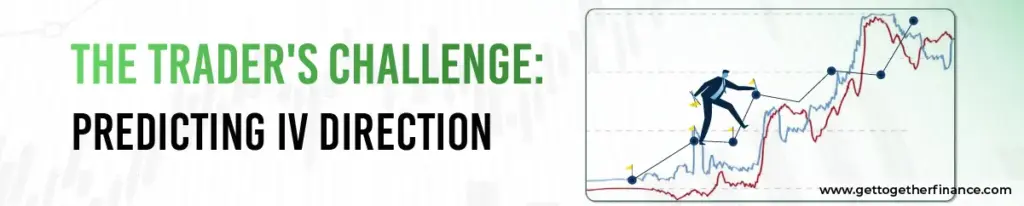
Implied volatility (IV) is difficult to predict because it is not as volatile as a stock price. It is influenced by events, news, and traders’ moods. Traders try to estimate IV movement, but it is generally uncertain.
Implied volatility tends to rise before major events like earnings or big news because of higher uncertainty. When the event is over, IV quickly declines as uncertainty disappears, which is also known as IV crush.
The problem is that IV can move in the opposite direction and reduce profits even when the trader correctly estimates the stock direction.
What is IV Crush? How It Affects Options Buyers
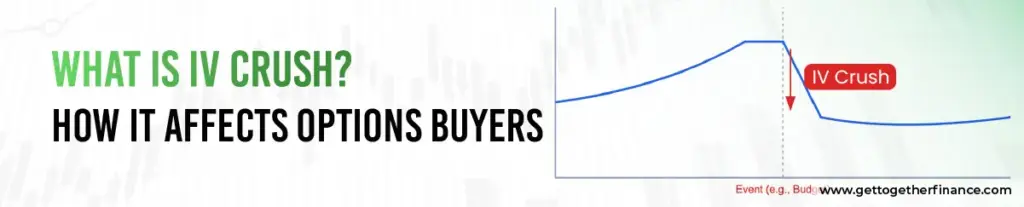
When implied volatility suddenly declines after a major event such as news or announcements, it is known as IV Crush. Even when the stock moves in the right direction, a fall in IV still leads to a rapid drop in option prices.
Before a big event, ambiguity is elevated; that’s why IV increases, which makes options costlier. In the belief of a major shift in price, option buyers spend a high amount on premiums. When the event is over, unpredictability vanishes, and IV declines rapidly. As a result, option buyers lose their money and earn less profit even if the stock moves in the right direction.
IV Rank and IV Percentile: What They Mean for Traders
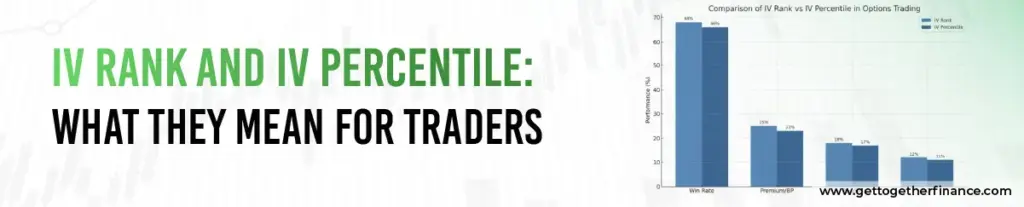
IV Rank and IV percentile are basically the metrics that traders use to assess whether options are overpriced or underpriced based on implied volatility levels. Rather than relying solely on IV, they compare it with previous IV levels to give meaningful insights.
IV Rank: It helps traders understand whether the current IV is high or low compared to its earlier range. This makes it easier for them to decide whether to buy or sell options.
- If IV Rank is high (near 100) → IV is high → options are expensive
- If IV Rank is low (near 0) → IV is low → options are cheap
IV Percentile: It helps traders understand how the current IV compares to its past frequency. This allows traders to easily decide whether options are priced high or low at any time.
- If IV Percentile is high → IV has been lower most of the time → options are expensive now
- If IV Percentile is low → IV has been higher most of the time → options are cheap now
Conclusion
In options trading, implied volatility (IV) is an essential factor because it tells how much price movement the market expects in the future. It helps traders understand whether options are expensive or cheap, so they choose the right strategy. During high IV, they prefer to sell options and buy options when IV is low. By using tools like IV Crush, IV Rank, and IV Percentile, traders make better decisions.
Q. What’s implied volatility?
Implied volatility tells the story of market sentiments – whether there is calm or panic among active traders. On the basis of that, options pricing varies. For example – if IV is high, that means there are more active traders, hence the options are more expensive. On the flip side, if IV is low, that means traders are calmer and the market is steady so is the option price.
Q. Why is Implied volatility important?
Implied Volatility is super crucial and is based on a trader’s psychology (panic/calm). It is significant for options traders as it helps understand market sentiment and potential movement anticipation. If IV is high, options might become expensive. On the other hand, if IV is low, they are cheaper comparatively. It’s a big deal for pricing options and understanding the risks involved.
Q. Is high implied volatility good or bad?
As expert traders suggest not to trade during the high IV of the market, but some beg to differ and find opportunity in risk. According to expert traders, high implied volatility is mostly good for people selling options. But for those buying options, it can be tough because entering trades becomes pricier, making it harder to get good results.
Q. What is a low implied volatility range?
Range of low IV depends on the stock options. To analyze the low IV range, it is crucial to review the historical volatility of options of specific stock or indices. The indicator shows the high and low range of IV. Compare the current IV with the historical volatility. If the IV is substantially lower than the historical volatility, it suggests a potential low IV period.
Q. How is implied volatility computed?
Calculating IV is a bit tricky. It involves looking at how much people are paying for options in the market. Traders and fancy math models work on this to figure out what the market thinks about potential price changes.
Q. How do changes in implied volatility affect options pricing?
When implied volatility rises, options become more expensive because people expect bigger price changes. If implied volatility drops, options can become cheaper because there’s less anticipation of significant market moves. IV directly influences the cost of options and how risky they are.
Q. What is the difference between implied volatility (IV) and historical volatility (HV)?
IV helps calculate expectations of the market’s future price changes. While HV gauges historical price fluctuations. It can be said that IV is forward-looking, while HV is backward-looking.
Q. Can options be used for hedging against market volatility?
Yes, options are often used to protect against market changes. For example, buying put options can help prevent big losses in your investments, especially when the market is unpredictable.
Q. How do I choose the right options strategy based on implied volatility?
Select your options strategy based on what you think will happen in the market. If you expect significant changes, traders can opt for strategies like straddle. For calmer times, techniques like covered calls might be better.
Q. How can I predict implied volatility?
Guessing implied volatility isn’t easy. But looking at past volatility and upcoming events can give traders some ideas/clues. Traders watch historical trends and news to make their best guess on market mood and potential movement in the future.
Q. What does implied volatility measure?
Implied volatility measures active traders and market moods, especially in a specific period. This also shows how uncertain and risky the market feels at the specific time and how active traders are reacting in response to market uncertainty.
Q. How does implied volatility affect options prices?
Higher implied volatility tends to inflate option prices. It shows increased uncertainty and potential for larger price movements. Conversely, lower IV represents lower option premiums.
Q. What is considered a low implied volatility?
Typically, anything below 20 is seen as low IV. This shows that the market is expecting lesser ups and downs. It also indicates lower perceived risk and more predictable price movements in the short term.
Q. What is implied volatility in stocks?
Implied volatility tells the story of the market mood and behavior of active traders. It is one of the crucial aspects of options trading. If IV of an option goes up, it causes a rise in the option price. On the flip side, if the IV drops, options become more affordable.
Q. Is implied volatility beneficial?
Yes, especially for active options traders. IV gives overall views of how the market looks, giving insights into potential market preferences and price differences. Using IV, traders can spot the right moment to enter the market and gain benefit, while managing their risks.