
Position Trading- Definition, Strategies, Pros and Cons
- Updated on :
- 1389 Views
- by Manaswi Agarwal

 Instagram
 Linkedin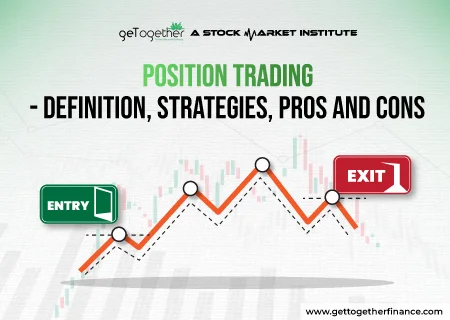
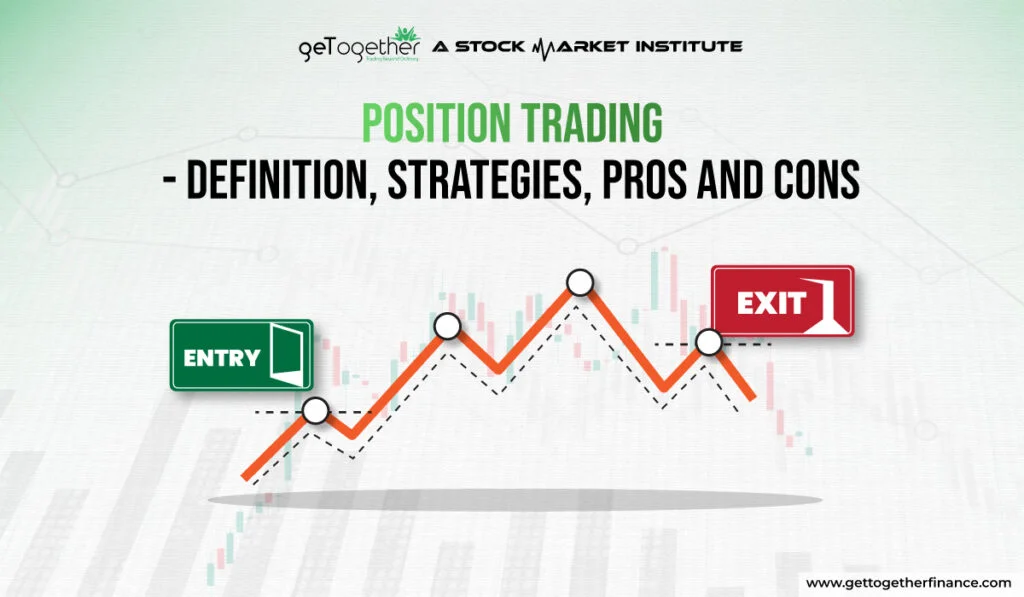
You must have observed that traders often use different trading strategies based on their trading style and goals. Position trading is one such strategy in which traders hold their positions for an extended period, typically from several weeks to months. Rather than tracking every short-term price move, position traders typically study broader market trends and rely on technical analysis to spot potential trading opportunities.
The goal here is to capture a bigger price move, rather than making frequent trades throughout the day. This approach calls for patience, solid risk management, and the ability to stick with a trade through normal market ups and downs. Position traders generally aim to benefit from larger price movements or longer-term market trends rather than short-term fluctuations. Let us explore position trading and its various strategies in detail.
What is Position Trading?

Position trading is a strategy where traders hold their positions for a longer stretch of time — usually a few weeks to months — aiming to benefit from bigger price movements or longer-term market trends. Instead of reacting to every short-term fluctuation, position traders keep their focus on the bigger picture. They can take long or short positions based on their market analysis and outlook.
Unlike scalpers and day traders, who chase short-term price moves, position traders give their trades more room and time to play out. In terms of holding period, this approach can feel similar to long-term investing, but position trading generally relies more on market analysis and specific trading setups to spot potential opportunities.
Now that we understand the meaning of position trading, let’s look at its strategies.
Position Trading Strategies
As we already know about the benefits of positional trading, let us learn some of the common positional trading strategies that could help you effectively execute positional trades:
Support and Resistance
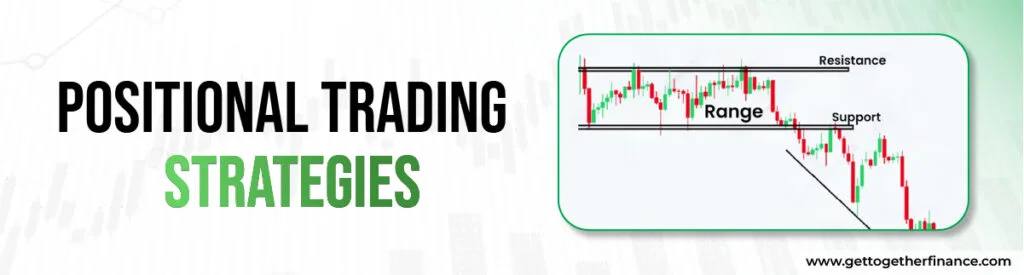
Support and resistance is one of the technical analysis strategies that allow traders to visualize the price action of a stock. A support level constitutes the lower limit of price, while the resistance level consists of the upper level of the stock. It is identified by the historical data of charts that are taken into account by traders to predict future price movements.
After a breakout of the resistance, previous support and resistance levels help to understand the price moves. With the help of historical data, traders can identify their entry and exit levels as per the analysis of support and resistance levels.
Pullback and Retracement Trading Strategy
Pullbacks are referred to as short moments where market correction or reconciliation takes place in an upward trend or vice versa. Traders keep an eye on a pullback in the market to buy at low prices when prices dip. Traders make their positions strongly based on the trend, so they are required to take accurate measures to avoid the risk of a trend reversal. It is one of the useful strategies for traders as they can enter the market at more favorable prices while minimizing their risks by setting stop-loss orders.
Trading Breakouts
The breakout trading strategy is associated with support and resistance levels wherein traders wait for the price to cross these levels and give a breakout either upwards or downwards. As per the breakout, traders enter long or short positions. It requires experience to understand these types of trades, which should be taken after taking proper risk measures.
Along with these commonly used strategies, traders can also use demand and supply analysis to spot potential entry and exit levels based on how price is moving.
After discussing some commonly used position trading strategies, let’s look at how Demand and Supply Theory can provide another approach to analysing potential entry and exit levels.
Demand and Supply Theory
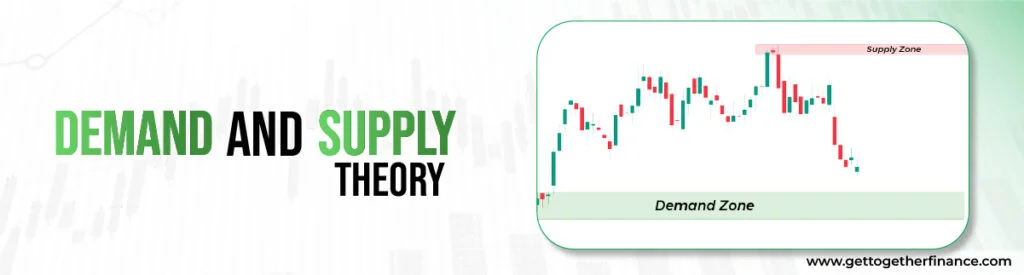
After studying all the common strategies that are already used by positional traders, here comes the demand and supply theory. The stock market works on the demand and supply of a particular stock. If a stock is in demand, the price potentially increases, and vice versa. According to this theory, traders can make their entry at the bottom levels from which the prices start moving. It tells traders to take positions when the price reaches the levels of the demand zone.
Traders do not have to wait for breakout points to enter the position at such high prices, increasing the efficiency of demand and supply theory. Not only that, traders can efficiently manage their risks by creating a strong trading plan as explained in the GTF elementary course.
Demand and supply theory is used to understand the overall price action of a stock, based on which a trader can profit from each rally in the stock. Advanced technical analysis includes the top-down approach, according to which the overall price action of a stock is analyzed as per the demand and supply zone. If the price enters the supply zone, then it is highly expected that the price will fall, from where a short position can be traded. You can learn about this strategy in depth from GTF – Trading in the zone course.
Now that we have discussed Demand and Supply Theory, let’s look at some of the key advantages of positional trading.
Advantages of Positional Trading

Position trading is a pragmatic approach used by traders, where they can earn substantial returns within several months. There are several trading approaches such as swing trading, day trading, scalping, etc., but position trading offers many advantages, which include:
Long-Term Plan
Positional trades are executed with a long-term approach with the view that asset prices move significantly in the long run. This is why traders take advantage of long-term trends in the market, which results in generating substantial gains over time.
Reduced Short-Term Risks
Short-term fluctuations in the market aren’t a major concern for position traders. Their positions are held for several weeks or months, with the aim of capitalizing on substantial price movements in the asset over the long run. Positional trading becomes less risky than swing trading and day trading as it involves long-term perspectives.
Reduced Stress
Positional traders have a long-term outlook and are less vulnerable to market manipulations. It is less stressful as the frequency of monitoring the market reduces. This strategy allows traders to have more flexibility in their trading schedule and be more convenient with their work instead of stressing about the price movements.
Less Transaction Costs
Positional traders are not involved in regular trading such as swing trades or day trades, which reduces the cost of position trading. Therefore, position traders can earn higher profits after paying commission and fees.
Position trading offers several advantages, but it also comes with certain challenges and risks that traders should understand.
Disadvantages of Position Trading
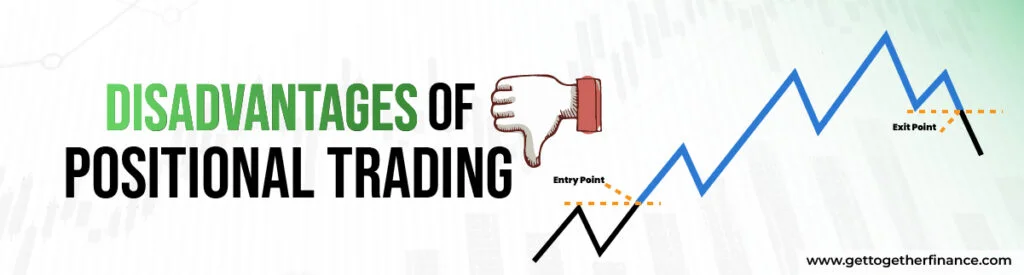
Despite the several advantages of positional trading, there are some cons of holding positional trades, and a trader must be aware of those risks and disadvantages. Let’s get to know them in detail:
Opportunity Cost
Traders may have to incur opportunity cost while holding positional trades. Opportunity cost refers to the cost that is incurred by a trader when a higher potential trade is missed out on as the funds are blocked in a positional trade. Traders can often miss out on short-term trading opportunities that could have offered big returns.
High Capital Requirement
Position traders typically hold a large amount of capital to withstand market fluctuations while maintaining a diversified portfolio. They’re also required to maintain their margin requirements to absorb potential losses.
Limited Trading Opportunities
In position trading, traders are involved in limited trading approaches, which restrict their opportunities for trading and hence are not exposed to a variety of trading opportunities. Position traders cannot pick every trade because their trades are based on long-term perspectives.
Market Volatility
Positional traders are exposed to long term market risks as they hold their positions for an extended period. Sometimes, market volatility because of unexpected news or events can result in potential losses for the trader.
Emotional Challenges
Holding trades for the long term is emotionally challenging for traders; holding for a long period requires discipline and patience to avoid impulsive decision-making.
Also Read: Flash Trading
Wrap It Up…
Short-term investors or traders execute position trades wherein they hold their trades for an extended period with a long-term perspective. Demand and supply help you to accurately execute your positions and gain maximum profits.
However, no trading strategy can guarantee profits; traders should always factor in market conditions and manage their risk carefully. You can learn the same by enrolling in GTF – Trading in the zone course, which is quite a powerful concept and is adopted by many traders.
FAQs
What is Positional Trading?
Positional trading is a kind of investment approach used by traders where they enter in a position for an extended period of time. Usually, positional traders hold their trades for several weeks or months.
What are the benefits of positional trading?
Position trading offers several benefits to traders such as: increased capital over the long term, lower transaction costs, reduced stress, and others.
How long to hold positional trades?
You should hold positional trades as per the strategy that you have adopted and the targets planned to achieve. There is no specific period; however, generally these trades are kept for several weeks or months.
What is the strategy of Positional Trading?
A demand and Supply theory is one of the most effective strategies that help traders to identify their entry or exit positions.